
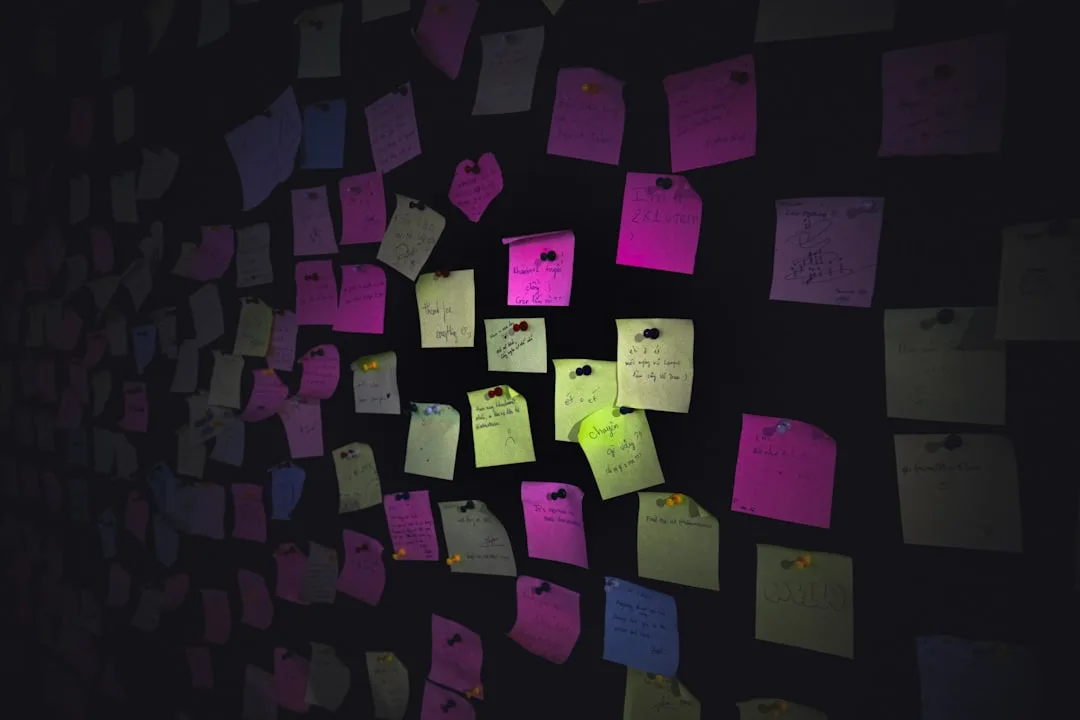
Forty Ideas Between a Shopping List and a Phone Number
He opened his notes app to pick the next video's idea.
He found forty notes.
Some were video ideas, some were a shopping list, one had a plumber's phone number, another had the name of a book he'd wanted to read.
And among the video ideas themselves, he couldn't tell which he still wanted and which he'd moved past. All the same shape, the same size, with no date and no status.
So he closed the app without choosing.
The problem wasn't that he hadn't written things down. He'd written everything down. The problem was that writing it down was the end of the road rather than the start.
The Problem Isn't Capturing, It's What Comes After
Any notes app can capture an idea. The problem is that once captured, the idea sits there inert.
You open the app two weeks later and find forty accumulated ideas, with no way to know what's ready to produce and what still needs thinking about.
What Changes When an Idea Becomes Part of a System
An idea in Bardiyah isn't just a line of text, it's a unit with a path: captured, then reviewed, then turned into a project when you decide it's ready.
That difference is simple, but it changes how you treat every idea, because you know there's a clear next step.
Three Problems Ordered Organisation Solves
The Idea That Gets Lost
When you capture an idea in an ordinary note among dozens of others, you'll probably forget it.
In Bardiyah the ideas all sit in one place dedicated to them, not mixed in with the rest of your daily affairs.
The Difficulty of Telling an Idea From a Decision
A notes app records everything in the same form: a passing thought and a task due today look identical.
In Bardiyah an idea is one thing and a project is another. And when an idea becomes a project, it means you've made an actual decision to produce it.
The Break Between Idea and Script
In the traditional method you capture the idea in one place and write the script somewhere else entirely, as covered in: how to write a YouTube video script in Bardiyah, step by step.
And that move loses part of the original thinking. In Bardiyah the script is generated from the idea itself, so the context stays present.
When Ordinary Notes Are Enough
If you're capturing a passing thought you don't intend to produce soon, an ordinary notes app is enough.
The difference shows when a number of ideas has accumulated and you want to know which is ready for the next step.
How to Start in Practice
Set aside a short slot each week to review your saved ideas.
Any idea that's ripened enough, turn it into a project immediately. Any idea still unclear, leave it and come back next week.
This system prevents ideas from piling up without pressuring you to produce everything at once, and two months from now you won't be facing forty lines with no idea which ones matter to you.