
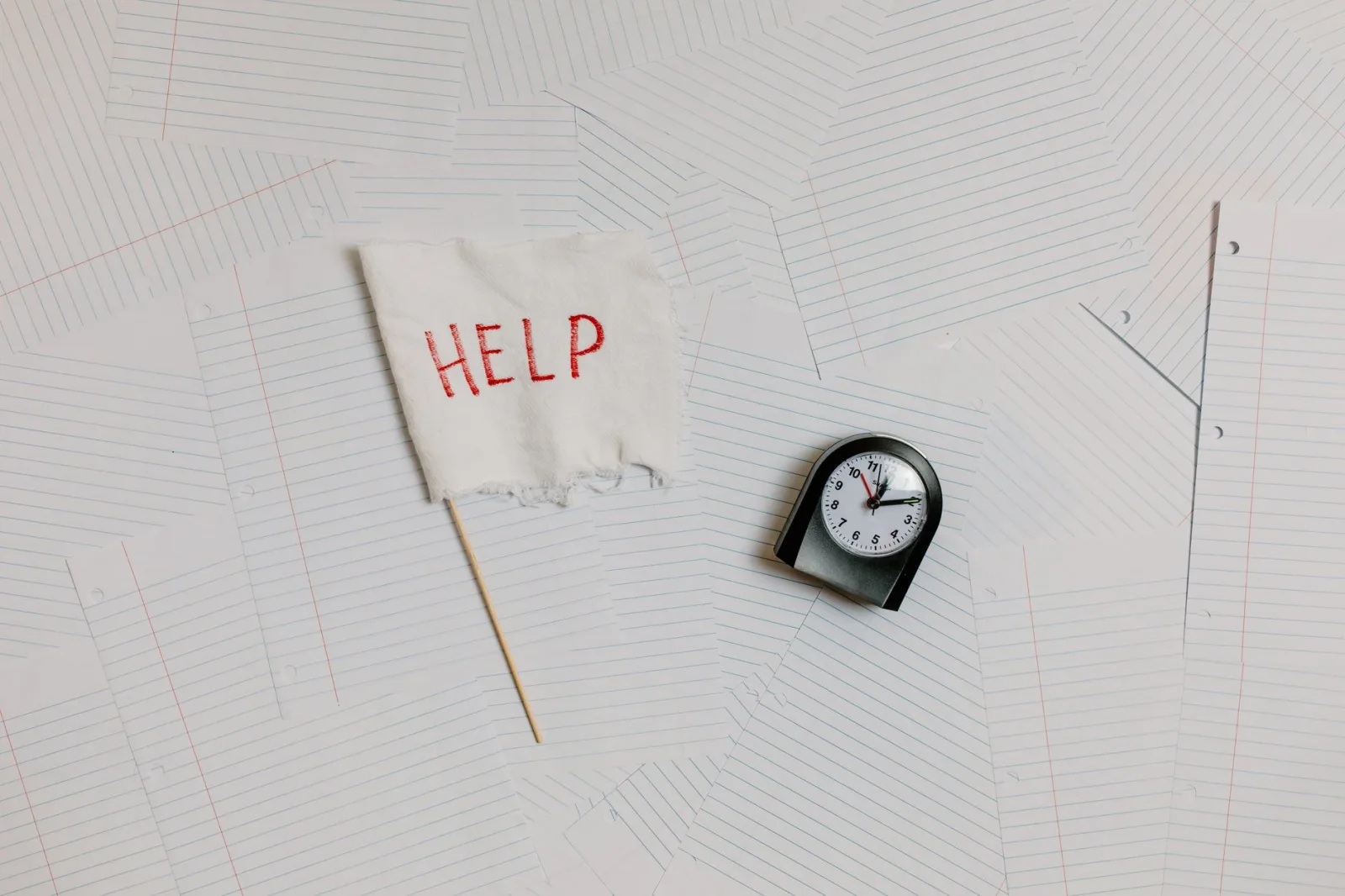
He told his audience the film would be out in three weeks. By week five he was still editing, and by week six he had stopped opening the project at all.
It was not that he had abandoned the work. It was that opening the file now meant facing the delay. So he filmed short clips, answered comments, and did everything except this project.
Two months later the project was still where it was, neither published nor deleted. That is the worst place a creator can stand: not working and not free.
A delay is information, not a verdict
A late project tells you something about your time estimates rather than about your ability. Most people who run late estimate time using their best day and then live ordinary days.
So the first step is not an apology and not doubled effort. It is knowing exactly where you are.
Write down what is actually left
The feeling of being late is bigger than the delay itself, because the mind carries the project as one lump. The cure is turning it into a list.
Open a page and write every remaining task as a specific action: "film two shots at the market", "write the voiceover for section three", "match the interview's colour", "export". Then put a number of minutes against each.
Most people get a surprise at this moment: what felt like two weeks appears on paper as seven hours. Others get the opposite surprise, and learn that the date they are chasing was never possible.
If you do not know your real hours, work them out once by the method in What Does One Video Actually Cost You?
Three causes, three fixes
| The cause | Its sign | The fix |
|---|---|---|
| Ambition larger than the time | Every stage takes twice what you planned | Cut the scope, not the quality |
| A mistake in an earlier stage | The edit never ends and the material is incomplete | Go back one step and fix the source |
| Something in your life | A sudden stop with no cause in the work | One new date, and rest without guilt |
The common error is treating the first cause with more late nights and the second with more editing. An edit that never ends is usually a script or coverage problem rather than a patience problem.
Cut the scope, not the quality
This is the most important decision here. Two things can be cut: the size of the video, or how well it is made. The first solves the problem; the second costs you the reason for the work.
How to cut scope:
- Delete a whole station from the video's structure rather than shortening every station.
- Make this video part one and publish the rest as a second video. That solves the delay and gives you two videos.
- Replace a scene that needs travel with one you can film where you are.
- Drop the effects and graphics you added in your head and nobody asked for.
Do not cut: clean audio, factual accuracy, or permission from people you filmed.
Half an hour a day rebuilds momentum
A late project becomes psychologically heavy, and the weight is what stops you opening it. The method that works: half an hour a day at a fixed time, on one specific task from your list.
Do not start with the hardest task. Start with the smallest one you can finish in the first sitting. Completing a single item restores the sense of progress more than a whole day of hesitant work.
After a week of that, set your schedule to the truth of your life as in A creator's working week.
And publish something else meanwhile
A channel that stops because of one project loses twice. If you have a simpler video ready or preparable in two days, publish it next week.
That is the backup video explained in A publishing calendar that holds. Publishing something simple during a delay protects your rhythm and takes pressure off the large project.
If a client is waiting
Do not disappear. One short message solves most of the problem, with three things in it only:
Hello [name],
Quick update: the project is at [stage], and it has slipped past the original date.
The new date: [one specific date].
If there is anything we can cut to get it to you sooner, tell me.
One specific date beats three excuses. And whoever gives a second date and misses it loses trust rather than time, so make the new date wider than you think you need.
And the audience waiting
If you promised a date, announce the delay in one sentence with no detail and no long apology: "the film needs more time and will be out in [month]." People respect that more than silence, and they do not need reasons.
And do not promise a second date until you have written the task list and seen that it is possible.
When to let the project go
Three signs; if two of them are present, letting go is the right decision:
- The reason you started has gone. The event passed, the subject changed, or you no longer care.
- What is left costs more than it will return. It needs travel or money or a month, and its effect does not justify that.
- Core material is missing and cannot be re-got. The person is no longer available, or the location closed.
Letting go does not mean deleting. Keep what is in it: the footage with clear names, the script, and three lines saying what you learned and why you stopped. Many of these projects come back a year later in another shape, and some become one clip inside a later video.
And if the project is with an editor
A shared delay needs one thing: a short call rather than a chain of messages. Agree on exactly what is left, on one date, and on one round of revisions. Most delay in shared work comes from scattered notes, and the fix is in Handing a project to an editor.
Ten minutes that stop it repeating
Once you have published, sit for ten minutes and write: at which stage did the time go? How many hours did it actually take against what you planned? Which item will I change on the next project?
Three lines like that, after three projects, bring your time estimates closer to reality than any general rule. And that sitting is part of The Monthly Channel Review.
A late project does not end with an apology or an all-nighter. It ends with a short list, one date, and half an hour a day.