
The Permission That Wasn't Permission
You were in a market, and you saw a vendor working with his hands in a way that looked beautiful.
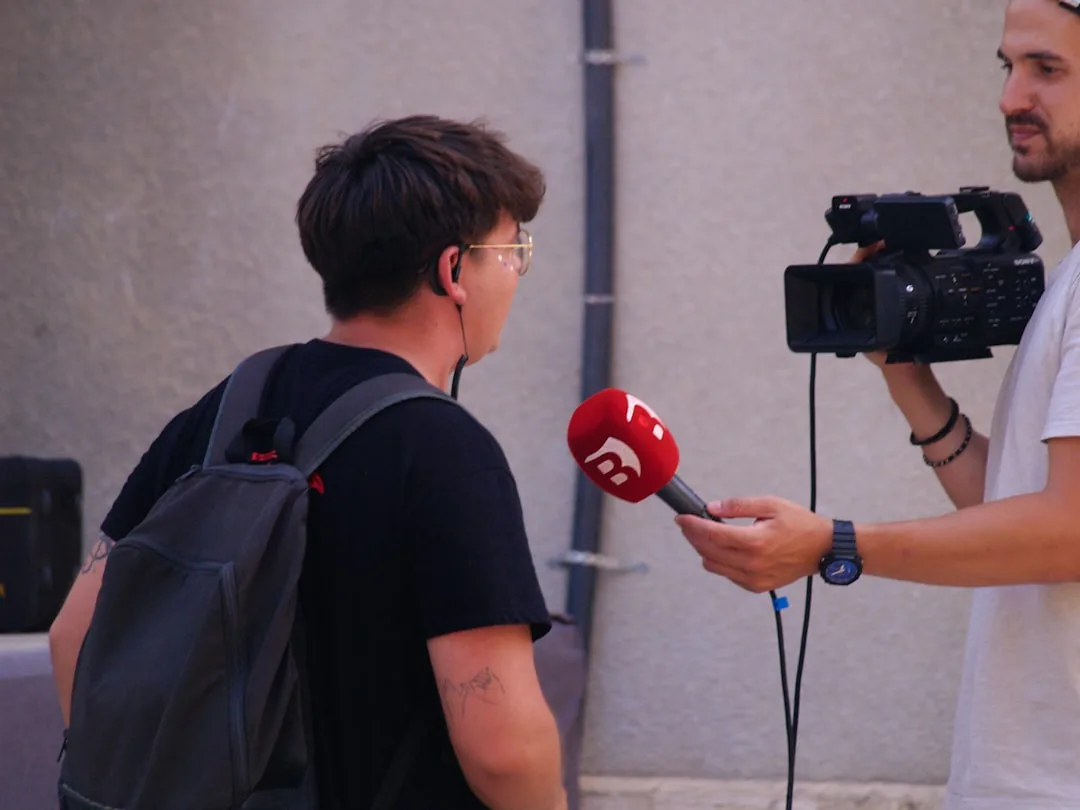
So you raised the camera and asked: "Can I film?"
He smiled and said: "Sure, go ahead."
You filmed for ten minutes, asked him two questions, thanked him and left.
And you published the video.
A month later a message arrived from his son: my father would like the video taken down.
When you spoke to him, he said one thing: "I thought you were filming for yourself. I didn't know the whole world would see me."
He didn't lie to you, and you didn't lie to him. You asked, and he agreed.
But the two of you were talking about different things.
Why This Matters More Than It Looks
Music and image rights concern files. This concerns real people, and getting it wrong can cause real harm to someone who never asked to appear.
And there's a difference between two questions: am I legally allowed to film this person? And should I film them?
The first is answered by laws that differ between countries. The second is answered by you, and answering it properly avoids most of the problems with the first.
The Basic Rule: Permission Before, Not After
Ask before you raise the camera. Filming first and asking afterwards puts the person in a position where refusing isn't easy, and that isn't real consent.
And explain three things in two sentences: who you are and what you make. Where the video will be published. And how they'll appear in it.
For example: "I'm making a video about the market for my YouTube channel. Would you let me film your work and ask you two questions? Anyone on the internet will be able to see it."
That last sentence is the important one, and it's exactly what was missing in our story. Plenty of people agree while picturing a family video rather than a public post. Consent to something the person didn't understand isn't consent.
How to Document Consent
The simplest method for everyday content: film the person agreeing. One sentence at the start of the take, like "my name is X, and I agree to this material being used in the video", is far better than nothing.
A written release is necessary for larger productions and commercial content. A simple page with the name, the date, a description of the use, and a signature.
And keep the documentation with the project files, not on your phone alone. The problem surfaces months later, and phones get replaced.
Children: An Entirely Different Rule
This is the point in the whole article that calls for the most care.
A child's own consent has no standing on its own. Permission from a parent or guardian is required, explicitly and before filming.
And in schools and care settings, the institution's permission doesn't replace the parents' in most countries.
And even with permission, think once more: does the child's appearance genuinely serve the video? And does anything identify where they are, like a school name, a street, or a distinctive uniform?
The safest rule: if the scene can be filmed without showing the child's face, do that.
Situations Calling for Extra Care
| The situation | What to consider |
|---|---|
| Someone in hardship or need | Appearing may worsen their position, and dignity comes before the story |
| A patient or inside a hospital | Health privacy is protected in most jurisdictions |
| An employee at work | They may not be free to refuse, so ask their management too |
| Someone in an embarrassing position | Don't film, however tempting the shot |
| A gathering or private occasion | The organiser's permission doesn't replace individuals' |
And the unifying principle: the less freely a person can refuse, the greater your responsibility.
Backgrounds and Passers-By
In wide shots it's impractical to ask everyone in frame, and that's understood.
But the distinction matters: someone passing in the background is one thing, and someone filling the frame and clearly identifiable is another.
In practice: shoot from angles that reduce close faces. Use a shallow depth of field so what's behind you blurs. And blur faces in the edit when in doubt.
And If Someone Objects After Publication
Listen first and don't defend immediately. Usually it won't be an objection to appearing at all, but to the context.
And remove the footage if you're asked to. Even if you hold written permission, insisting on keeping a shot of someone who has come to hate it is a small win against a large loss of reputation.
Treat it as a cost of doing the work rather than a defeat. Re-editing is cheaper than a feud.
A Warning
Privacy law, image rights, and protections for children differ substantially between countries, with some very strict and some undefined.
This article covers general professional and ethical principles, not legal advice.
Check the law where you're filming, and consult a professional for any commercial production or anything featuring children or protected groups.
In Short
Ask before. Explain where it'll be published. Document the consent. And remove it on objection.
And with children, raise your caution by a full level.
A shot obtained with full permission stays usable years later. A shot taken in a hurry can turn into a problem at any moment.