
The Video Published Too Soon
He sat in front of the camera one night when he was exhausted, and talked about something he was still in the middle of.
The experience wasn't over. He was living it that same week. His voice wavered twice while he spoke, and he didn't know how to end the video so he ended it on a general line.
And he published it in the morning.
The video reached a lot of people. Hundreds of comments arrived: some of them very kind, some of them advice he hadn't asked for, some of them questions about details he'd never intended to share.
He spent the entire week reading. And by the end of it he'd discovered something he hadn't expected: the experience he was still trying to understand now belonged to thousands of people. Every development in it had become a public event. And he was now expected to remain the person who told that story.
The problem wasn't that he told it. The problem was that he told it early.
Why Personal Stories Work at All
Not because your life is dramatic, but because concrete experience lands where abstract advice fails.
"Manage your time" is advice everyone knows and nobody follows. "I was going to sleep at four in the morning, waking up at noon, and feeling like my day was gone" makes the viewer see themselves.
And a personal story gives you what other formats can't. It can't be copied, because it's yours alone. It builds a relationship rather than just usefulness. And it explains "why" rather than only "how".
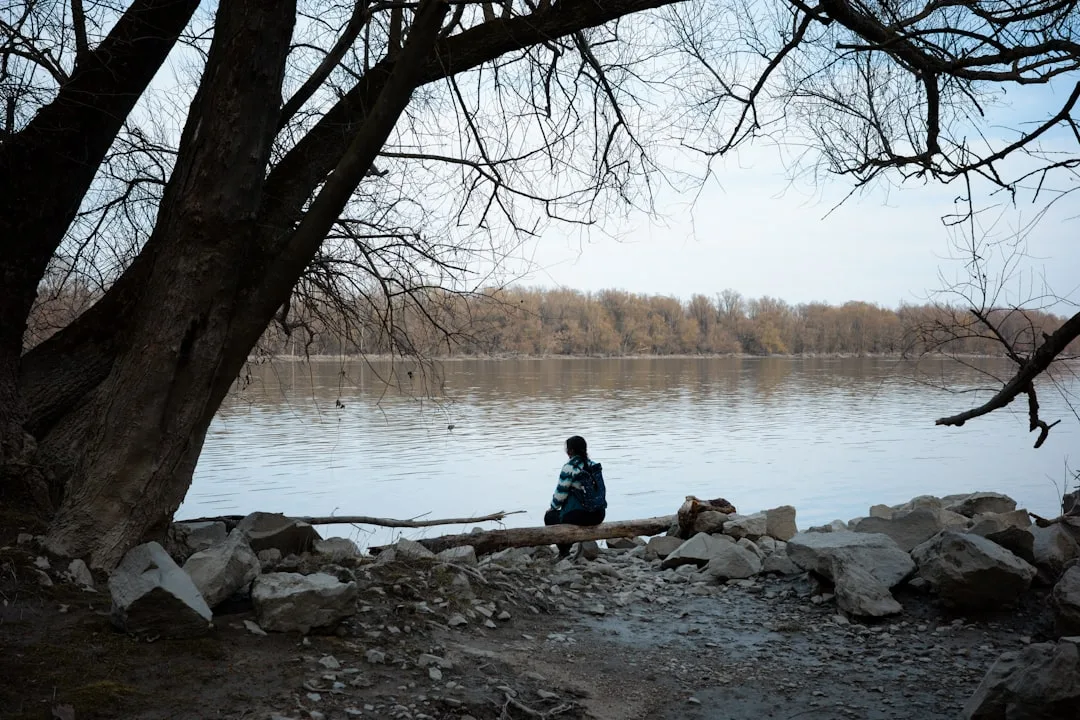
The Decisive Rule: Tell It From the Riverbank
Don't tell a story you're still in the middle of.
An unfinished story isn't a story, it's an open wound. And telling it to a camera does three bad things.
It fixes your version of events before you understand them, so you become the prisoner of an account you wrote while confused.
It makes your recovery public, so every comment becomes part of your experience rather than a comment on it.
And it puts pressure on you to remain the person who told that story.
All three of which are what happened in the story we opened with.
The simple test: can you tell this to a stranger without your voice shaking? If the answer is no, the experience hasn't become a story yet. Wait.
And this isn't postponing it forever. The same experience will be more useful in a few months, when you know what it actually meant.
A Structure That Fits Any Experience
| Stage | What's in it |
|---|---|
| Before | Who you were and what you believed |
| The moment | The event that broke that belief |
| The resistance | What you tried that didn't work |
| The shift | What actually changed |
| After | What you do differently today |
And the third stage is the most important and the most skipped. A story that jumps from problem to solution reads as dishonest, because nobody changes on the first attempt. Mentioning what failed is what makes your success believable.
Where Sharing Stops
The line isn't about how intense the experience was. It's about three questions.
Is it over? An open experience gets told after it closes, not during.
Does it belong only to you? Your story about your illness is yours. Your story about a family dispute contains people who never agreed to appear. Change the names, ask permission, or cut the section.
And will you accept it in five years? The internet doesn't forget, and a video you publish today might be seen by an employer or by your child a decade from now.
And what doesn't get told without preparation: detailed medical diagnoses, live legal disputes, and any detail that identifies a specific person without their permission.
And Beware the Pattern That Consumes You
Some channels succeed on personal stories, and it turns into a permanent demand for more.
The problem is that escalation becomes a condition: each story has to be heavier than the last to produce the same effect.
Signs you're on that path: thinking about events in your life through the lens of "would this make a video?" Feeling pressure to share things you wouldn't have shared. And measuring the value of your experience by its view count.
If you notice this, the fix is simple: stop making this format for a while. The channel can take it, and you matter more than it does.
And Sharing Isn't Treatment
This point deserves to be clear.
Talking about a difficult experience to a camera can feel like relief, but it isn't a substitute for talking to someone you trust or to a professional.
The difference is that an audience can't give you back what you actually need. They can sympathise, but they don't know you, and the reactions, positive or negative, can unsettle you more than they support you. Which is what the week of reading comments did in our story.
So if an experience is still affecting your sleep or your mood, that's a sign the priority is talking to someone close to you or to a professional, rather than turning it into content.
Mistakes That Cost a Story Its Effect
Complete heroism. Nobody believes someone who never made a mistake in their own story.
An imposed lesson at the end. Let the viewer draw their own conclusion, and stick to what changed in you.
Details that don't serve. Names and dates that add nothing weigh the telling down.
Speaking badly of others. The story is about you, not them, and listing other people's faults flips the viewer's sympathy.
And an ending with no present tense. "And this is what I do today" is what turns a story from a memory into something useful.
In Short
Tell what's finished, from the riverbank rather than from inside the water, and mention what failed before what worked.
And stop at the line that belongs to someone else or still hurts you.
The most honest story isn't the most revealing one. It's the one whose teller was in possession of himself while telling it.
And if what you're going through is hard right now, the priority is finding someone to talk to, not finding it a title and a thumbnail.