
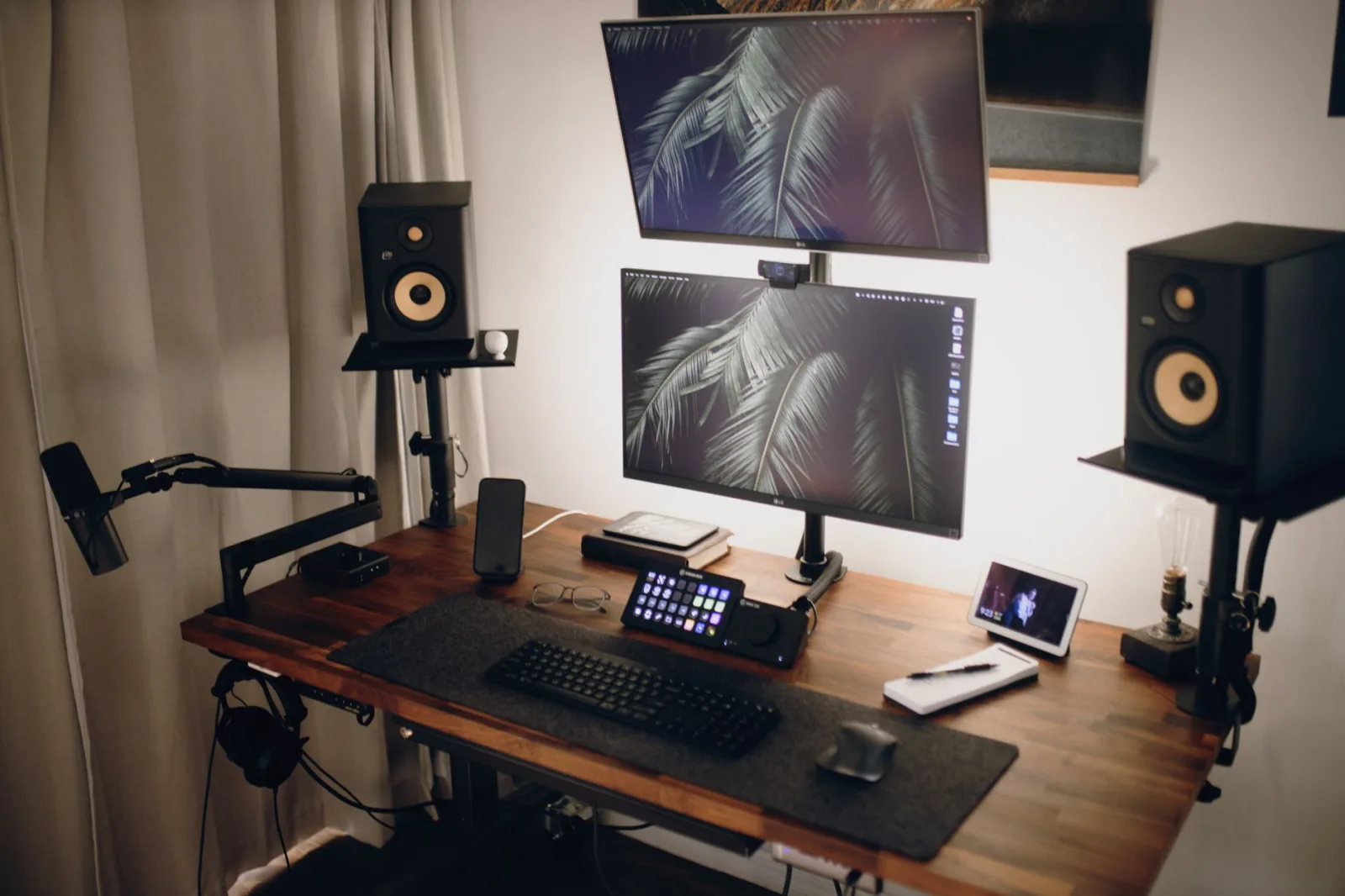
He downloaded the streaming app, set up the camera, rearranged the shelf behind him twice, then hit start while picturing a hundred people waiting on the other side. Fifteen minutes later the counter said three, and one of the three was his little brother. He ended the stream and decided that going live does not work for a small channel like his.
The decision was wrong. But the attempt was wrong before it.
Going live is not a growth tool
The first thing we do is measure a stream the way we measure a recorded video: how many people watched. A stream does not work like that at all.
A recorded video works while you sleep. It reaches a stranger who has never heard your name, and he decides in seconds whether to stay or leave. A stream asks people for something much harder: be in a specific place at a specific time, and put down whatever is in your hands for you. A passing stranger does not do that. Someone who already knows you does.
So if you have thirty real followers and ten of them show up, that is a very successful stream. The problem is the number that was in your head, not the ten who came.
What a stream does that nothing else does
A recorded video gives people the best version of you: tidy sentences, mistakes cut out, rhythm under control. That is good, but it leaves a small gap. The viewer knows he is watching an edited version.
A stream closes that gap. You stumble, you think out loud, you say you do not know the answer to a question, you laugh at your own slip. None of this can be manufactured in the edit, and that is exactly why it works. People leave a stream feeling they met you rather than watched you.
There is a second benefit most people skip: a stream is the fastest way to learn what your audience actually cares about. The questions that arrive in one hour are worth a month of guessing. For other ways to read that, see five practical ways to find out what your audience wants.
When a stream earns your time
Not every week, and not because somebody told you to be consistent. A stream earns its place in specific situations:
- After a video that raised a lot of questions. The comments filled up and every written answer needs a paragraph. Gather them into one stream.
- While you are deep in something long. A project that takes two months and will not surface before then. A stream keeps people with you on the way instead of letting you disappear.
- When your work is a skill you can watch being done. Teaching, drawing, editing, retouching. Seeing the hand work beats explaining it.
- When you have a guest. A guest solves half the difficulty of streaming, because the conversation fills the silence instead of you.
- When you want to open the floor to questions. A dedicated question session is the easiest stream to start with, and needs almost no preparation.
What you should not do is go live because the day is empty and no video is ready. People feel a stream with no subject from the first minute.
The least gear that works
The most important piece of equipment is not the camera, it is the connection. A stuttering picture ends the stream in two minutes no matter how good your talk is. Test your upload speed rather than your download, stream from close to the router, and use a cable if you can.
Sound comes next. A mediocre picture is tolerable; bad audio is not tolerable for two minutes. Before you buy a microphone, read why your room ruins your sound before the microphone does, because what usually wrecks a stream is room echo, not the price of the gear.
Then the camera: your phone is genuinely enough, but prop it on something. And the light: sit facing a window during the day, never with your back to it.
One more thing people forget: charge everything, and put the phone on do not disturb. A single call ends the whole stream.
How to run the hour itself
Announce the time at least a day ahead, and remind people an hour before. Nobody attends something they do not know about.
Then start talking instead of waiting. The worst possible opening is five minutes of asking whether people can hear you and giving the room a moment to fill. You punish the early arrivals with boredom, and the late ones walk into a room empty of meaning. Start your subject in the first second as if the room were full.
Since people arrive at different moments, reintroduce yourself and your topic roughly every ten minutes, in one short sentence rather than a fresh introduction.
Read comments out loud before you answer them, because whoever watches the recording later will not see them. Then finish at the time you announced. A stream that ends on time gets waited for next time.
The recording is not a finished video
The biggest mistake afterwards is uploading it as it is and calling it this week's video. A stream is an hour with ten excellent minutes and fifty ordinary ones. The viewer who was not there will not give you the hour.
Treat it as raw material. Pull out the parts that stand alone and turn them into short videos the way we described in how to cut a short clip out of a long video. If it contains a complete, coherent explanation, make that its own video, shot fresh rather than trimmed out.
Most important: open your idea file right after the stream and write down every question you were asked. Half of those questions are titles for upcoming videos, and you heard them from people instead of guessing them.
And if nobody shows up
This will happen, usually the first time or two. Do not close the stream after fifteen awkward minutes. Finish the time you announced, and talk as if the room were full.
The reason is simple: an empty stream today is a recording people watch tomorrow and a month from now. Habits build slowly. People show up once they believe the time is fixed, and that belief needs at least three rounds before you can fairly judge the experiment.