
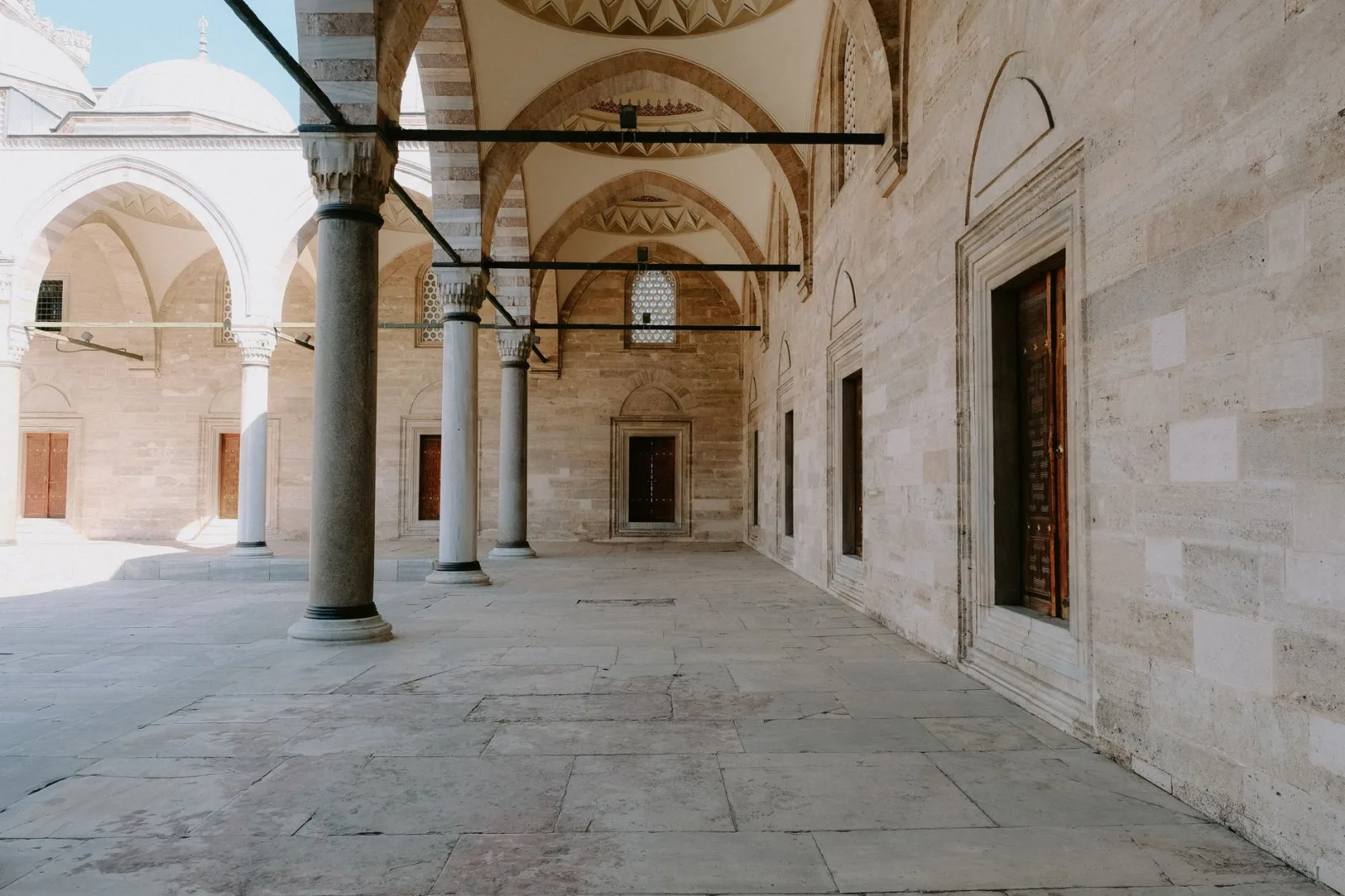
He had a filming permit from the city authority, a stamped page and a list of locations. So he walked into the old shrine, raised the camera and started filming the ceiling.
A man in his fifties came over, very gently, and said one sentence: "People pray here." Nobody was praying at that moment, but the man meant something else: that this place is not a location but a home for something, and that your page does not cover this door.
He lowered the camera and sat for twenty minutes asking and listening. Then the man allowed him to film in a defined area at a defined time. He came away with better shots than he would have taken, and with a relationship he had not counted on.
Rules differ between countries and from one place to another, and what follows is a way of asking for permission rather than a ruling on any place or belief. Always ask the people of the place; they are the authority.
Three circles of permission
Most mistakes happen because people imagine permission is one thing. In reality there are three circles, each independent of the others:
- The state. The general filming permit, which is the subject of Filming permits when you travel. It lets you work in the country; it does not open any particular door.
- The place's custodians. The person or body that looks after the place: an imam, a priest, a shrine keeper, a hospital administration, a village elder. This is the circle people neglect most, and it is the decisive one.
- The people inside it. Anyone who appears in frame holds a separate right, with the rules in Filming Other People: Permission and Respect, and for organised work you need The release form.
Four questions before you raise the camera
Go to whoever runs the place, introduce yourself and what you make in two sentences, then ask four questions in order:
- Is filming allowed here? An open question that leaves room for no.
- In which areas? Some spaces are open and some are only for the people of the place.
- At which times? There is usually a quiet hour free of visitors and worship, which is also your best hour.
- What must not be filmed? The most important question, because the answer protects you from mistakes you did not know were mistakes.
And do not ask these at the door with the camera in your hands. Ask on an earlier visit with no gear. The difference between the two is the difference between a guest and somebody asking for a favour.
Places that need particular care
| The place | What changes there |
|---|---|
| Places of worship | Times of worship, dress, areas not entered, filming worshippers |
| Funerals and mourning | The default is not to film, and only by the family's invitation if you do |
| Hospitals | Administrative permission and each patient's own, and never anyone in a vulnerable state |
| Schools and children's homes | The administration's permission and the parents', usually with no faces |
| Crisis areas and camps | Permission from an organised body, and strict rules on image and dignity |
| Private homes | The owner first, then everyone in the house |
In the last three especially, filming with no responsible organisation that knows you is not only an administrative breach. It can expose people to real harm.
Etiquette that opens doors
- Ask about dress before you arrive. For you and your crew.
- Keep the sound and the gear small. A large rig and lights in a place of worship turn a visit into an event.
- Do not film worshippers' faces without permission. A back view or a wide shot usually does the job.
- Do not interrupt. Never ask anyone to repeat a movement or a prayer for the frame, and never ask an imam or a priest to pose for you.
- No flash and no drone without explicit permission, and a drone is refused in most of these places.
- Remove what others remove, and enter where others enter. You are a guest rather than an event photographer.
Ask about cultural boundaries rather than guessing
In some places what is permitted depends on who is filming whom: areas for women that men do not enter, and the reverse. Do not guess at this and do not act on what you know from your own country. Ask, and whoever helps you on the ground knows all of it better than you do, which is one of the largest roles of the local fixer.
Reading the place before you arrive saves you half of these situations, as in What to Know About a Place Before You Travel to Film There.
Dignity before the shot
Some images make your film stronger and the person in them weaker. The test that settles it: would this person be content to see himself like this in front of his own family?
So do not film somebody in illness, in tears or in visible poverty because the image is affecting. Do not film a child alone without a parent's permission. And do not turn people's need into a handsome backdrop for your voiceover.
If that is precisely your subject, ask permission explicitly, explain where it will be published, and give the person the right to object after seeing the material. What comes out that way is stronger artistically too, because the person in front of you is present rather than taken.
If you are refused
Do not argue and do not wave the paperwork. Say thank you, lower the camera at once, and ask one question: "Is there a time or a place where it would be possible?" Most refusals here are about a time or an area rather than an absolute no.
Then ask for the alternative: the courtyard instead of the interior, the wide shot instead of the close one, a shot from outside. The alternative the custodian hands you is the shot you can publish without worry.
And in the edit
Not everything you filmed with permission gets published. Look again at three things before you publish: a face that appeared without permission, an area you were told not to film that crept into a wide frame, and a shot that turns people's worship into a spectacle.
Delete all three. Nobody notices the minute you lose. Everybody who knows the place notices a scene published without respect, and it closes doors you will never know had closed.
What sums up this whole subject best is a line from an old cameraman: in these places you are asking to stay, not to film. And whoever was allowed to stay, filmed.