
Laws in this area differ greatly between countries, and some treat buildings and artworks in public places quite differently from others. What follows is a way of thinking rather than legal advice, and when in doubt ask a specialist in your country or the owning body.
This time he was organised. He requested permission to film in the square two weeks before travelling, got it in writing, carried it printed, and filmed for two days without anybody stopping him.
He published the film, and ten days later a message arrived from a nearby museum's administration: a contemporary sculpture appears in the background across two minutes of the film, and in the thumbnail, and the sculptor holds a right in his work.
The square's permission was not a mistake. But it was permission for one thing, and the frame held three.
Three different rights in one frame
Separate them, because each is asked of a different party and follows a different logic:
1. The location's right. Whoever owns the land or the building can set conditions on filming inside their property, even when the place looks public. That is the first thing to ask about, and it is set out fully in filming in public places: what to know before you go.
2. The trademark right. The logo, the name, the registered design. This right protects its owner from somebody using the mark in a way that confuses people or implies a relationship that does not exist.
3. The author's right in an artwork. A sculpture, a mural, a painting, a building's design, a song heard in the background. This is a right in the work itself, independent of the place it sits in.
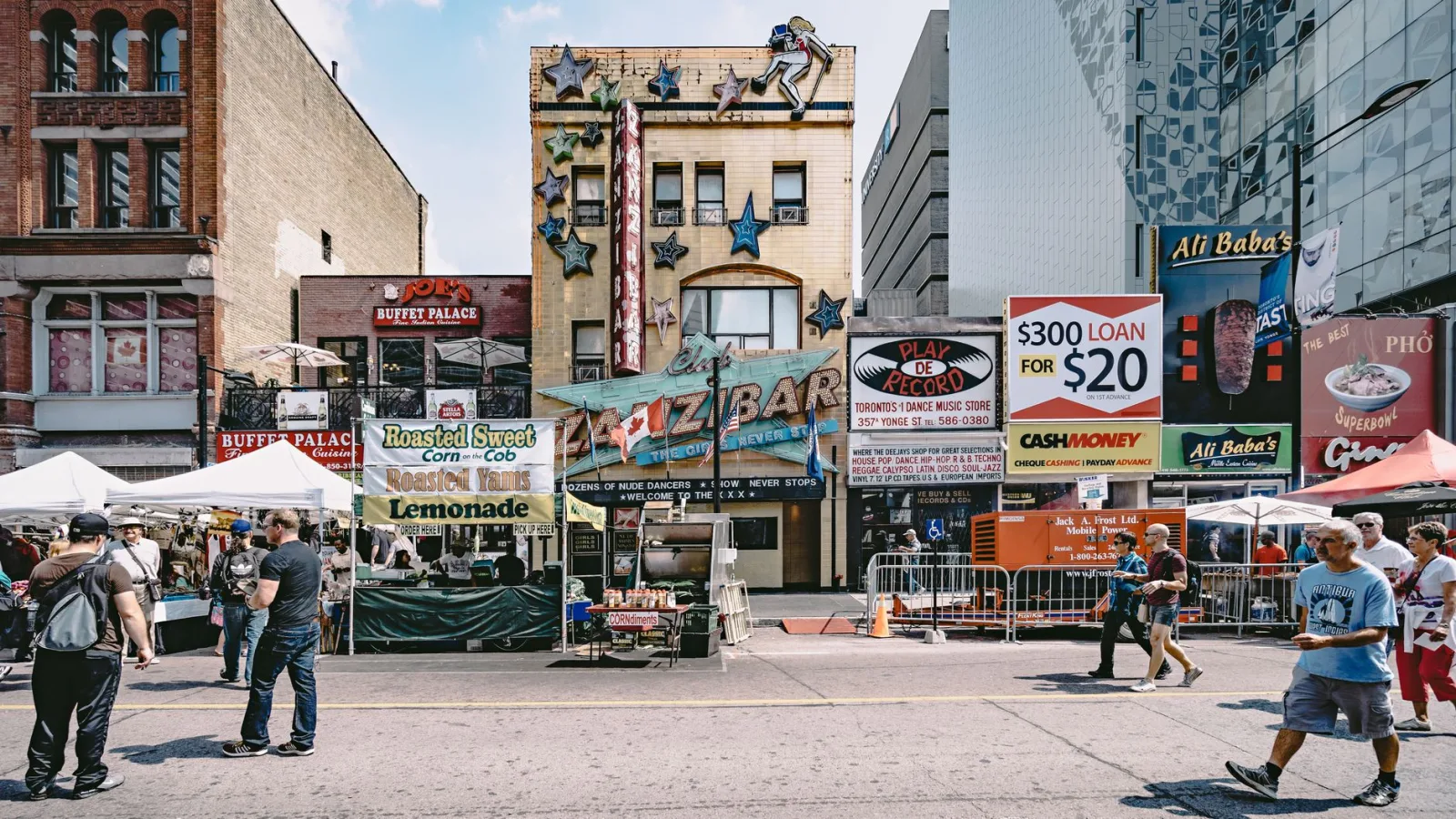
And in a single frame all three can meet: a square somebody owns, carrying a sign with a trademark, in front of an artist's mural.
The practical rule: incidental or subject?
You will never clean every logo in the world out of your frame, and nobody asks you to. The question that settles most cases in most systems:
Did the element appear incidentally because it exists in the place, or has it become the video's subject or its shop window?
- A restaurant sign passing in a walking shot: incidental.
- The same sign in the thumbnail and in the title: now it is the subject.
- A sculpture in the background of a wide shot: incidental.
- The same sculpture across ten close shots as the film's centre: now it is the subject.
The closer the element gets to being the reason people open the video, the more you need permission.
Trademarks: appearing is not using
A logo being in shot is not in itself use of the mark. What becomes a problem is:
- Your video looking as if it came from that company or was endorsed by it.
- Using its logo in your thumbnail or your channel's identity.
- Using its name or mark in a way that implies a sponsorship that does not exist.
- Showing it in a context that damages it.
The safe rule: name names in speech as much as you like in a review or comparison, and keep logos out of your designs.
Artworks: the case everybody forgets
A sculpture, a mural and a painting are protected works, and the protection runs for a number of years set by each country's law. Some countries allow filming permanent works in public places generously, others restrict it tightly.
So your practical position:
- A very old work: the chance of a problem is lower.
- A contemporary work by a known artist: ask, especially if it is prominent in your frame.
- A mural in a street: incidentally, usually no problem; as the subject of a whole video, ask its maker, and most mural artists agree happily if you name them.
Buildings and landmarks
Filming a building from the street is not usually a problem. Where problems do appear:
- The building has its own regime, as with critical and military installations.
- You are inside private property with no permission.
- The building is a registered mark belonging to a body, and you use it in a commercial identity.
Products in your hand
If you show a product in a video where you explain or review it, using and showing the product is natural. Watch two things: do not use the company's promotional images without permission, and do not put its designs in your thumbnail. Your own photographs of the product are your photographs.
And if you need images or archive footage of something you cannot film, their safe sources are in photos and archive footage: where to source them safely.
Screens and music in the background
These are the most common practical sources of trouble and the least anticipated: a television showing a match in a café you are filming in, a song coming out of a speaker in a market, a screen showing a film in a house you are visiting.
These need attention in the moment rather than lawyers: ask for the television to be switched off, move two steps, or shoot the other angle. And if one slips into the material, dealing with it in the edit is simpler than dealing with it after publishing, and the path claims take is set out in a copyright claim versus a copyright strike.
Four fixes in the edit
If you notice an element that worries you and cannot reshoot:
- Reframe. Crop slightly and the element leaves the edge.
- Soften the background. A light blur on the background at that point.
- Shorten the appearance. A two-second shot instead of eight seconds changes the nature of the appearance.
- Replace the shot. Which is why you always film an alternative for every important scene.
And one rule: never put the element that worries you in the thumbnail or the first ten seconds, because those two places are what people see and what gets read as the video's subject.
When to ask for written permission
Ask in four cases:
- The element is your video's subject or a large part of it.
- The video is commercial or sponsored.
- The place is private and you enter by arrangement.
- The artwork is contemporary and has an owner you can identify.
And the message needs no more than five lines: who you are, what you are filming, where it will appear, which element appears, and that you would be glad to credit them. And whatever licence you obtain, keep it with the video's asset log, as in fonts, templates and effects: where to get them with your licensing safe.
If a takedown request arrives
Three steps in this order:
Read exactly what is being asked. Most requests want a section removed rather than the whole video.
Reply calmly and ask for the solution. "Would removing this shot be enough?" is a sentence that settles most cases in one message.
Do not argue about the right. Even if you are convinced you are right, arguing law with a body that has lawyers costs more than removing two shots.
A checklist before publishing
Five minutes on every video:
- The thumbnail: does it contain somebody else's logo or artwork?
- The first ten seconds: the same question.
- Is there one element that stands out from the rest of the scene and is not mine?
- Does the material contain a screen showing somebody else's content, or music from a speaker?
- Does the title name a brand in a way that implies sponsorship?
One worrying answer means two minutes in the edit rather than a week of messages after publishing.