
The Sentence That Opened the Door
Imagine arriving in a city where you know nobody. You have a week, a camera, and an idea.
Day one went on finding the real market rather than the one tourists are sent to.
Day two went on trying to film in an alley, until a man came out of his shop and asked what you were doing, and you explained for ten minutes in a language he doesn't speak, and he said no.
Day three went on trying to reach the man you came for, and nobody answered.
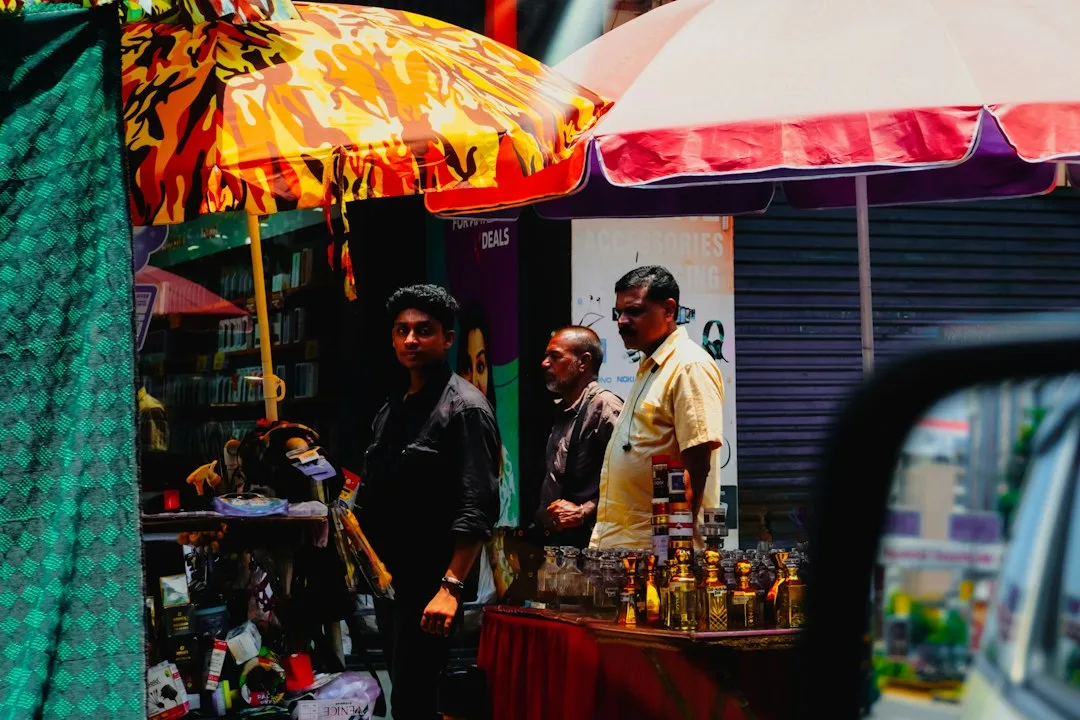
On day four you sat in a café and the owner started talking to you. Half an hour later he walked with you to the same alley, stood in front of the same shop, and said one sentence to the shopkeeper:
"This is my friend, he's going to film for five minutes."
And the door opened.
That sentence does what an hour of explaining can't. That's a local fixer.
Who They Are, and Why You Need One
They're not a translator or a tour guide, though they might be either.
Their real function is that they know who opens doors. Someone from the place who knows the people and knows the routes, and shortens three days into two hours.
Four Routes to Finding One
The Street
The simplest and cheapest. Walk around the area for two days without a camera. Sit in cafés, buy from vendors, talk to people.
The person you're looking for has signs: they ask more than they answer, they know people's names in the street, and they speak a little of another language.
And say what you want plainly from the first moment. "I'm making a film about this, and I'm looking for someone who knows the area" gets there much faster than vague talk that makes people wary of you.
The Driver
A driver who spends a whole day with you becomes half a fixer with no extra arrangement.
They know the city, they know when a place fills up and when it empties, and they can ask on your behalf.
And most importantly, they stand beside you when somebody objects to the camera. That alone is worth their fee.
Hire one by the day, not by the trip. A full day builds a relationship. A short ride builds nothing.
Photographer Groups
Every city has a photographers' group online.
Post a specific request rather than a general one. "Looking for a photographer in the city to assist on a week's filming, paid" is far better than "is anyone here from the city?"
And the advantage of this route is that whoever replies already understands cameras, so you won't need to explain what you need.
The Paid Fixer
In larger cities there are people who do this professionally. They arrange permits, book locations, and deal with official bodies.
You need one when the shoot is official, or in a place requiring permission, or involving a government body. Otherwise the first three routes are enough and cost considerably less.
Test Them Before You Rely on Them
Don't start with the big shoot.
Give them a small task on day one: take me to the old market, and set up a short conversation with a vendor.
Then watch three things.
Did they turn up on time? Someone late today will be late on the day that matters.
Did they say "I don't know" even once? Someone who knows everything knows nothing.
And how did they talk to people? If they were condescending, they'll close more doors than they open.
The Agreement
Agree on four things before you start, even in a short message.
Exactly what the work is: arranging meetings? Translating? Driving? All three?
How many days, and how many hours a day.
The fee, and who pays for transport and food.
And will they appear in the film? If they might, ask them and record their consent.
And don't leave the fee open. "We'll sort it out at the end" always ends in a dispute that ruins the last day of the trip.
Mistakes That Cost a Lot
Relying on one person only. If they fall ill or get busy, your whole project stops. Get a second name on day one.
Treating them as staff. They're a partner in the work. Someone who feels respected opens their home to you. Someone who doesn't walks you to the door and leaves.
Believing everything they tell you. They might tell you what they think you want to hear. Verify anything important from a second source.
And paying everything upfront. Pay part at the start and the rest at the end. It's normal and it protects both sides.
In Short
Start with the street. Hire a driver by the day. Ask photographer groups. Leave the paid fixer for official shoots.
Then test your fixer on a small task before you put your whole week in their hands.