
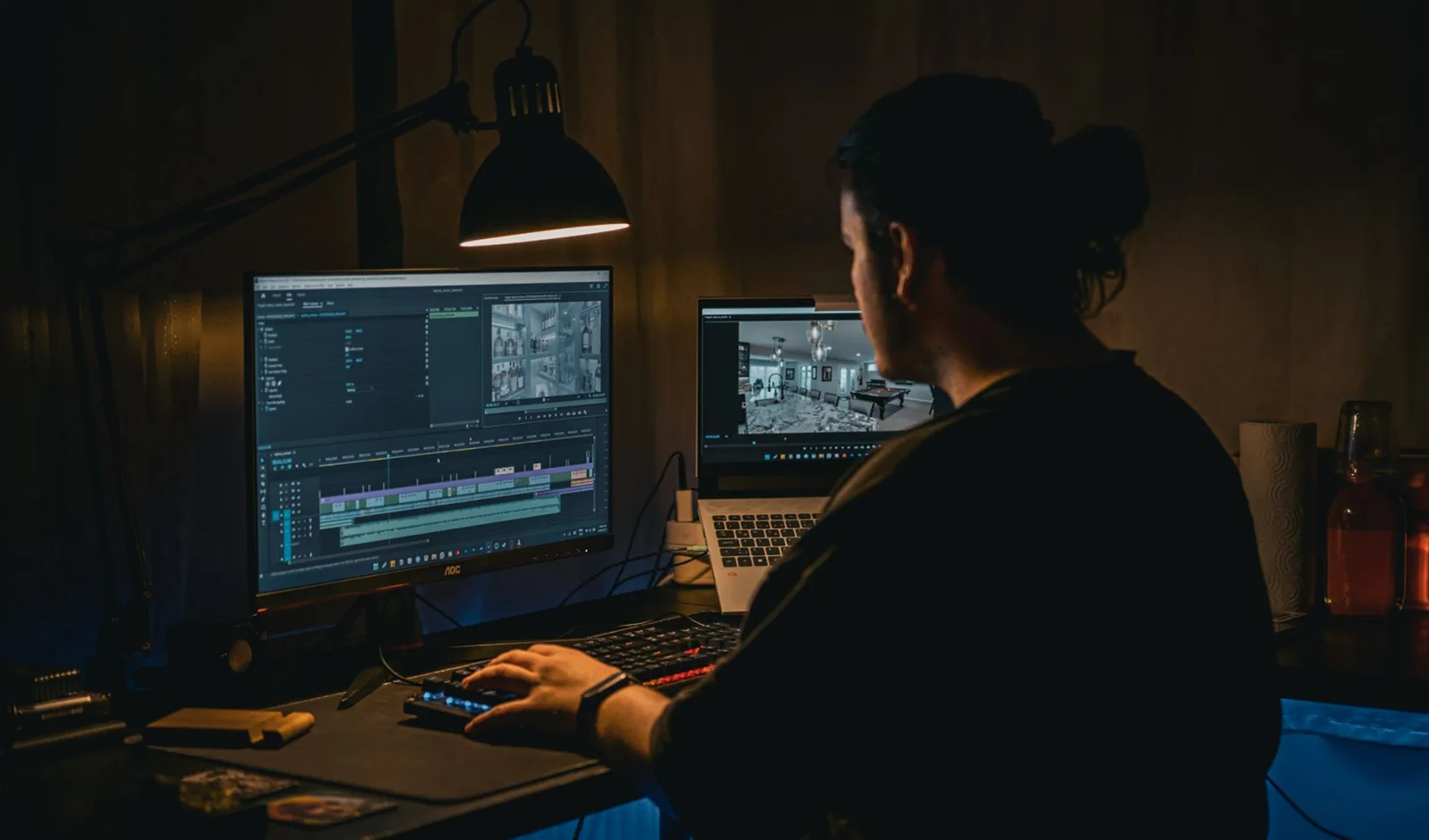
He got home from work at seven, ate, and opened the laptop at eight meaning to film. Then he told himself he needed to see how other people had covered the subject, so he opened one video, then a second, and at eleven he closed the laptop tired, having filmed nothing.
That repeated for five weeks. In the end he concluded he needed more time, when what he actually lacked was an arrangement: two hours of his real time went on the question "what do I do now?" and on preparation that never ended.
Most people making content have another job. This article is not about finding more time, it is about producing something with the little time that genuinely exists.
The problem is not little time, it is fragmented time
One hour after a day's work is not worth an hour on a free day. There is tiredness in it, and there is the fact that you start from zero: remembering where you stopped, opening the files, reading what you wrote, deciding what to do. All of that can take twenty minutes out of sixty.
So the remedy is not getting up earlier, it is reducing the number of times you start from zero. Everything in this article turns on that.
The one-task-per-session rule
The most important rule: every session has one task, known before you sit down.
Anyone who opens the laptop to work "on the video" loses half the session to switching: writing a line, then opening the editor, then looking for music, then trying a font for the title. Anyone who opens it to write, writes.
And the sessions are four kinds that do not get mixed:
| The session | Its length | What gets done |
|---|---|---|
| Writing | An hour | The video's structure, then its text, over one or two sessions |
| Filming | An hour and a half | Everything the video needs, in one go |
| Editing | One to two hours | A rough assembly, then a second session for sound and text |
| Publishing | Half an hour | Title, thumbnail, description and upload |
And each session starts with a line written at the end of the previous one: what do I do in the next session? That line alone buys you ten minutes every time.
The working week split between writing, filming and editing we set out in a creator's working week, and the rule is the same with less time.
Five hours spread out: a realistic week
Say you have five hours a week. This split genuinely works:
- Two evenings × one hour: writing. Writing suits the evening best because it needs quiet rather than physical energy.
- One weekend day × two hours: filming. All the filming in one session.
- One evening × one hour: a rough edit.
That produces one video every fortnight comfortably, or one a week if it is short and simple. The common mistake is to attempt a video a week in the first month, and then stop in the second.
Batching is the whole secret
If you take one thing from this article, take this: do not film every week, film once for three videos.
Setup is what eats the time, not filming. Mounting the tripod, setting the light, the clothes, testing the sound: all of that is half an hour you pay once or three times. Anyone who batches three videos into one session saves a full hour of their monthly time.
The batching method we set out in how to film a whole week's content in one day, and it matters more to someone with a job than to someone with their whole day free.
And batch whatever else can be batched: write two ideas in one session, prepare three thumbnails together, record two voiceovers in one sitting.
A fixed corner removes half the setup
Someone with little time cannot build a new scene every time. So have one place with saved settings: the camera on a marked spot on the floor, the light in its place, and the settings written on a card.
That turns preparation into five minutes rather than half an hour, which we explained in a fixed filming corner at home.
The same principle applies in editing: build a project template with your tracks, your music and your fonts, and start from it every time, as we set out in setting up an edit project.
Three things to cut from your work, not from your sleep
Anyone working with little time has to cut something. People cut sleep; the right answer is to cut these:
The manufactured intro. Animation and a logo at the top of the video take time and add nothing, and the viewer leaves during them anyway.
Perfection in the edit. The third and fourth editing sessions improve the video by ten per cent and take half your time. Publish at eighty per cent.
Big postponed videos. The project that needs twenty hours will not get filmed while you have a job, so split it or move it to a holiday.
And what is never cut: the sound, the clear idea, and the title and thumbnail. Those three are what gets watched.
The rate you can actually sustain
A video every fortnight, regularly, beats a video a week that stops after a month. Nobody notices your rate except you; what people notice is a complete disappearance.
So calculate your real time rather than your hoped-for time, and pick a rate you can manage in your worst week rather than your best. The calendar that holds we set out in a publishing calendar that holds, and its most important item for someone with a job is a backup video ready for the week when everything goes wrong.
And the week you can do nothing at all
A week will come with too much work, or illness, or a family commitment, and you will produce nothing in it. That is expected and accounted for, not a failure.
Three things rescue that week: the backup video you filmed when you had time, a short line to your audience if you want one, and coming back the following week with no long apology. Coming back after a break has its own method in coming back after a break.
And in any case, hold on to this: a job is not a temporary obstacle you wait out. Most people who make good content make it alongside other work, and some of them stay that way for years by choice. The work that funds you lets you refuse bad jobs and choose what you film, and that is an advantage many people never see.