
Laws about children and their images are narrower and stricter than those for adults, and they differ from country to country. What follows is a careful way of working rather than legal advice, and with children in particular always take the more cautious option.
He was filming in an old alley when three children came up laughing, stood in front of the camera and asked him to film them. So he did, and the scene turned out to be one of the best in the film: real faces, real laughter, a place that looked alive.
He published the video, and four days later a message arrived from a man saying he was one boy's father, asking for the scene to be removed that day. The man was not angry for no reason: his son appeared clearly beside their own front door, and the alley's name was written on the sign in the background.
The person filming meant no harm. He had taken permission from someone who did not have it to give.
The first rule: a child does not give permission for themselves
In every convention and most laws, a child cannot grant you a right in their own image. Laughing at the camera is not permission, saying "film me" is not permission, and even insisting enthusiastically is not permission.
Permission comes from their guardian: a father, a mother, or whoever stands in their place. This differs from adults, where an adult consents for themselves provided they understand what they are consenting to, as we set out in filming other people: how to ask permission and respect their privacy.
And at a school, a club or a camp you need two permissions rather than one: the institution's permission to enter and film, and the permission of each appearing child's family. The institution's permission alone is never enough, even if they tell you it is.
How to ask in practice
Do not ask with a general question like "can I film your kids?". Ask with four specific things, in a message or on paper:
- Who you are and what you are filming. Your name, the channel's name, and the video's subject in one sentence.
- Where it will be published. My channel on this platform and my pages, and whether it will be used in paid work.
- What will be shown of the child. Their face or only their hands, and whether they speak or appear in the background.
- How they withdraw permission. One sentence: if you want it removed later, write to me and I will remove it.
And keep the answer in writing. The release form and its items we set out in the release form: what goes in it?, and the difference with children is that the signature belongs to the guardian, not the child.
And on the street, if you cannot find the guardian, do not film the child. That is the simplest rule in the whole subject, and the most ignored.
Six things you never publish about a child
This is the most important part of the article, and it is about safety rather than only law. Do not publish anything that lets a stranger find the child:
- The school's name or uniform. A logo on a shirt is enough for somebody to know where they are every day.
- The street, the sign, or the house number. This is the most forgotten one, because it shows up in the background without your meaning it to.
- Fixed routines. "Every day after school he comes down to play here." That is a child's timetable, not a charming detail.
- A full name. A first name is enough, if you need a name at all.
- Anything embarrassing. Crying, falling, an awkward moment, or a health or family difficulty. The child laughing today may have their friends see it in ten years.
- Location data in the file. Strip location metadata before uploading, because cameras and phones record it automatically.
And one rule gathers all of this: a child cannot weigh the consequence of appearing years from now, and you can. So the responsibility is yours, not theirs and not their guardian's.
And your own children?
Anyone filming their own children has a different case rather than an easier one: you are the guardian, so the legal permission is in your hands, but the ethical decision weighs more.
Three questions before every time:
Will this child be happy with this clip at fifteen? If there is any doubt in the answer, do not publish it.
Is the clip about them or about me? A video that uses a child's distress as material for views is a different thing from a video they happen to appear in.
Can they say no? Give your child a real right of refusal and honour it the first time, otherwise their agreement means nothing. And once they are old enough to understand, ask every time and respect the answer.
And do not build a whole channel on your children. A child who became known without choosing it carries an effect they never agreed to, and the best thing is to keep them a small part of the picture rather than its subject.
Solutions that keep the scene and protect the child
What to do when you need the feeling and full permission is not available:
| The solution | What it gives |
|---|---|
| Filming from behind or from above | The movement and the play with no face |
| Hands, feet and details | The feeling of childhood with no identity |
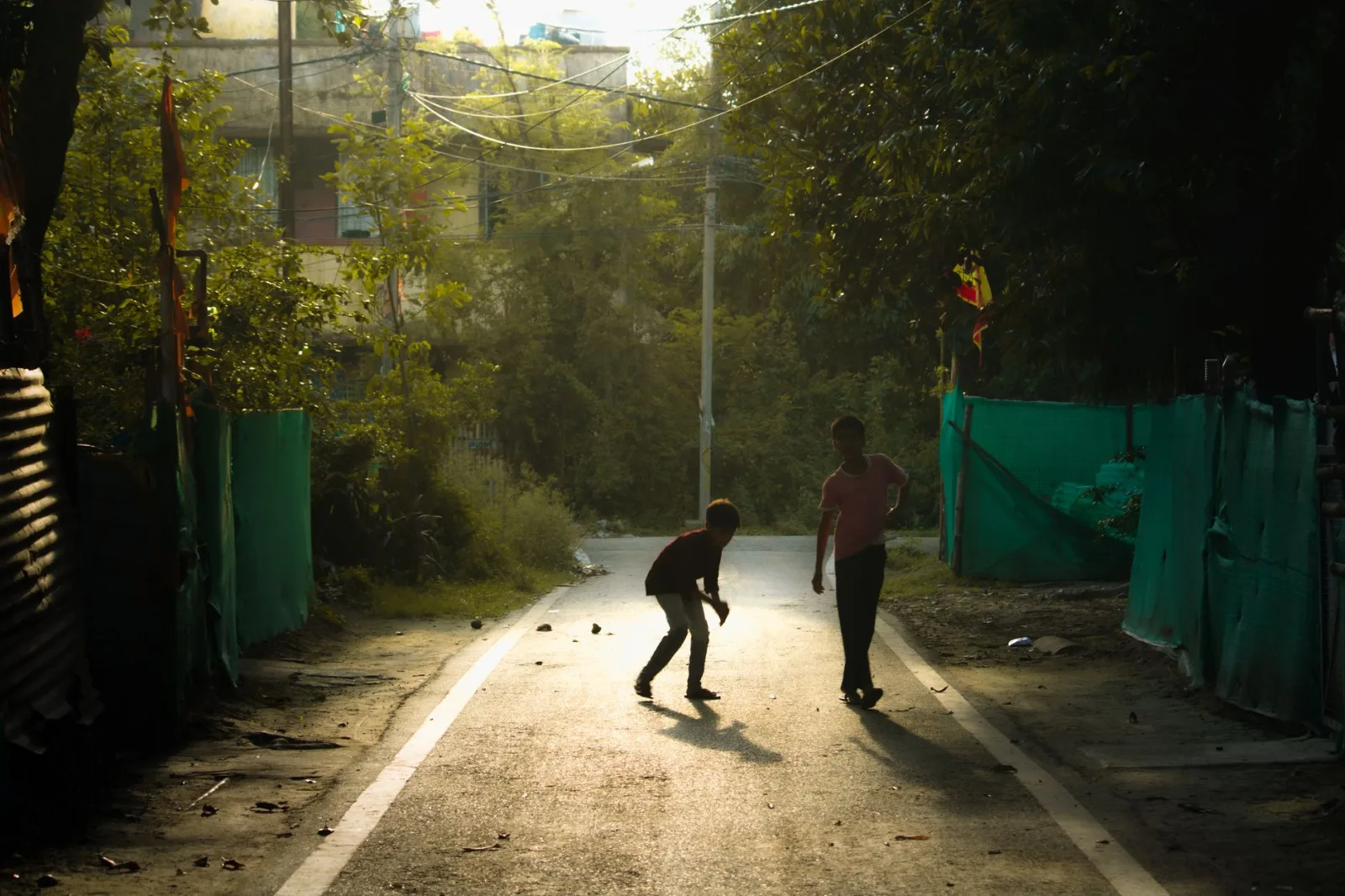
| A shadow or a silhouette | A beautiful shot and a safe one |
| The sound of laughter over a shot of the place | Stronger in the edit than you expect |
| Blurring the face | A last resort, and it draws more attention than it hides |
And most of the time the scene without a face is better cinematically rather than worse. Anyone who films working hands and running feet gets cutaways that serve the film more than a direct face does.
If a takedown is asked for after publishing
Do not negotiate, do not explain, and do not ask why. Remove the scene first, then write a short reply: removed, I am sorry, and thank you for telling me.
This is not weakness, nor an admission of a legal fault; it is simply the right thing. The child's family know their circumstances better than you, and there may be a reason you do not know. And anyone who hesitates for a day or two turns a small matter into a problem.
Then re-export the video without the scene and upload it, and do not substitute hiding the video for removing it if the request was explicit. And whatever is asked to be removed about a child gets removed from the original files too, not just from what was published.
And before any of that: the platforms have their own rules
Platforms have specific rules for content featuring children, and some of them change how the video works entirely: comments, notifications, and what gets shown beside it. These rules change, so read them in the dashboard as you upload rather than in an article, and what you grant the platform when you upload we set out in what do you give the platform when you upload your video?
And the summary is enough on its own: with adults you ask "did I get permission?", and with children you ask two questions: did I get the guardian's permission, and is there anything in the scene that shows where they are? Anyone who answers both before publishing never needs to remove anything after.