
The rules on this subject differ completely between countries and change every year. What follows is a method for finding the rule yourself. It is not legal advice, and it is not a list of rules for any particular country.
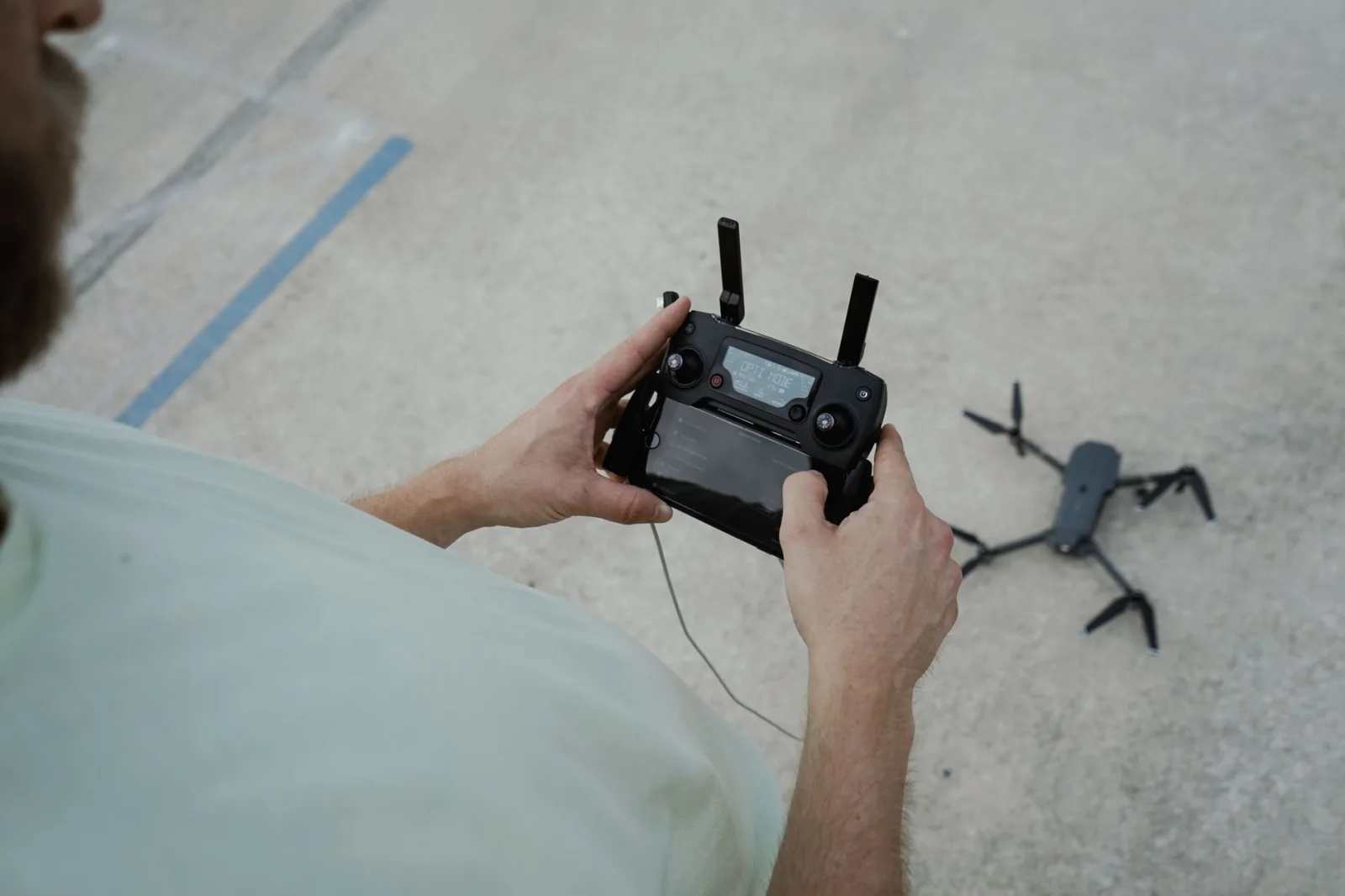
He stood in the customs queue feeling relaxed. The bag held a camera, two lenses, and a small drone he had bought for this trip specifically. The officer pointed at the bag, opened it, lifted out the drone, said one word in his own language, and pointed to a side office. He left the airport two hours later with a paper written in a language he could not read and no drone. He got it back on the day he flew home.
As far as he was concerned he had done nothing wrong. He was doing exactly what he had done on his last trip. But the country was different, and a different country means entirely different rules.
There is no general rule you can carry with you
This is the first idea to let go of: that there are such things as "the drone rules" worldwide. There is no such thing. Every state decides for itself, and states range from welcoming you, to banning foreign visitors from flying altogether, to allowing you but requiring registration in advance, to allowing you if the aircraft is under a certain weight.
And even inside one country the answer changes with the place: a city, a nearby airport, a nature reserve, a military installation, a listed monument, a border zone. A spot where flying is fine in the morning may be closed on the day of an official visit.
The practical result: you look the rule up fresh for every country, the same way you look up the shape of the power socket.
Four questions that settle any country
Do not read twenty pages. Find the answers to four questions only, and write them on one sheet:
- Is bringing a drone into the country allowed at all? This comes first because it happens at the airport, not at your location. Some countries allow entry if you declare the device, some hold it until you leave, and some refuse it.
- Is registration or a licence required? And who issues it, how long it takes, and whether non-residents can apply. Some registration systems take weeks, and that alone decides your travel date.
- Where is flying prohibited? Restricted zones are usually published on an official map or an app run by the civil aviation authority. That map is the most important file you carry.
- Does filming for publication need separate permission? Many countries distinguish recreational flying from flying for work that is published or earns money, and a video on a monetised channel counts as the second in a good many systems. The same distinction is covered in filming permits when you travel.
Four answers on one sheet is enough, and it saves you seventy pages of general reading.
Where to find the answer, ordered by trust
The order of sources here is not a detail. It is the difference between correct information and information that is two years out of date.
- The civil aviation authority of that country. Its official site is the first source and nothing else is. Search the country's name with "civil aviation authority", then look on the site for the unmanned aircraft page.
- The official restricted-zone app or map, if the country has one. Download it before you travel, because you may need it somewhere with no connection.
- The country's embassy or consulate, if your question is about bringing the device in. A short email gets you a written answer, and a written answer beats everything you can read.
- Local filmmaker communities: a Facebook or WhatsApp group in that city. These people know the practical reality, which is something no official site ever states.
- Travel articles and travellers' posts: for getting oriented, not for relying on. They are the fastest source and the most often wrong, and most of them are old.
The order is deliberate. If a travel article contradicts the aviation authority's site, the site is right.
Places to treat as restricted in every country
Even before you read any rule, treat these as restricted until an official source tells you otherwise:
- The area around airports, airstrips and helipads.
- Military and security installations, and prisons.
- Border zones.
- Palaces and government buildings.
- Nature reserves and listed heritage sites.
- Above crowds, festivals and marches.
- Low over residential neighbourhoods.
This list is not a law, but adopting it keeps you clear of most serious trouble.
The difference between "not allowed" and "needs a paper"
A great deal of what is described as forbidden is in fact something that needs a paper, and this is the most important point in the article. The person stopping you on the ground usually does not know the detail of the regulations, and says no because no is the safe answer for him.
So always ask one question in this exact form: "Is this prohibited, or does it need permission? And who issues the permission?" The gap between the two answers can be one email to one office, and it can open a place you assumed was closed. The same principle runs through filming in public places.
Batteries: a separate problem from the rules
Lithium batteries have their own civil aviation rules, independent of drone rules. The general pattern on most airlines: batteries in your cabin bag rather than checked luggage, within a stated number and capacity, with the terminals insulated.
Make it a fixed habit: keep batteries in their original or purpose-made pouches, always in the cabin bag, and check the dangerous-goods page of the airline you are flying with before every trip, because the conditions change.
Five minutes on the ground before every flight
Even with all your paperwork in order, do this at every location:
- Open the official map and confirm you are not in a restricted zone. The spot you flew from yesterday may fall in a different zone today.
- Look at the sky: low aircraft, helicopters, large birds, masts and cables.
- Look at the ground: is anyone standing under your flight path? Do not fly over people's heads.
- Ask the nearest person in charge if the place has one: a guard, a municipal worker, a landowner. One polite sentence saves you an entire confrontation.
- Note in your phone: the date, the location, the time, and the permission number if you have one. That record serves you if somebody asks months later.
If they stop you
Land at once. Do not finish the shot. Then produce your papers and give a short answer: who you are, what you are filming, where it will appear. Do not raise your voice and do not cite a law you read online. You are in someone else's country, and arguing costs more here than silence.
If they take the device or the card, ask for a paper confirming it and photograph that with your phone, and get the name and address of the office. And if you have a local with you, he is worth more than any paper, which is one reason the local fixer exists.
A backup plan: the high shot without a drone
If it turns out flying is not allowed, your film does not fall. The aerial shot is a means, not an end. Substitutes are everywhere: the roof of a building or hotel, a hill or mountain, a tower open to visitors, a bridge, a cable car, the window of a domestic flight, a long stairway. Human-height elevation gives a sense of place close to what a drone gives in most scenes, and the viewer does not grade you on your tools.
The drone sheet: one file per trip
Before each trip make one note containing: the country, whether entry with the device is allowed, the registration number if any, the link to the restricted-zone map, the aviation authority contact, and the battery conditions on your airline. Six lines that compress everything above.
That sheet lives in the same place as your pre-trip research on the country, whose structure is covered in what should you know about a place before you arrive. Make the drone page part of it, and you will stop discovering problems in the customs queue.