
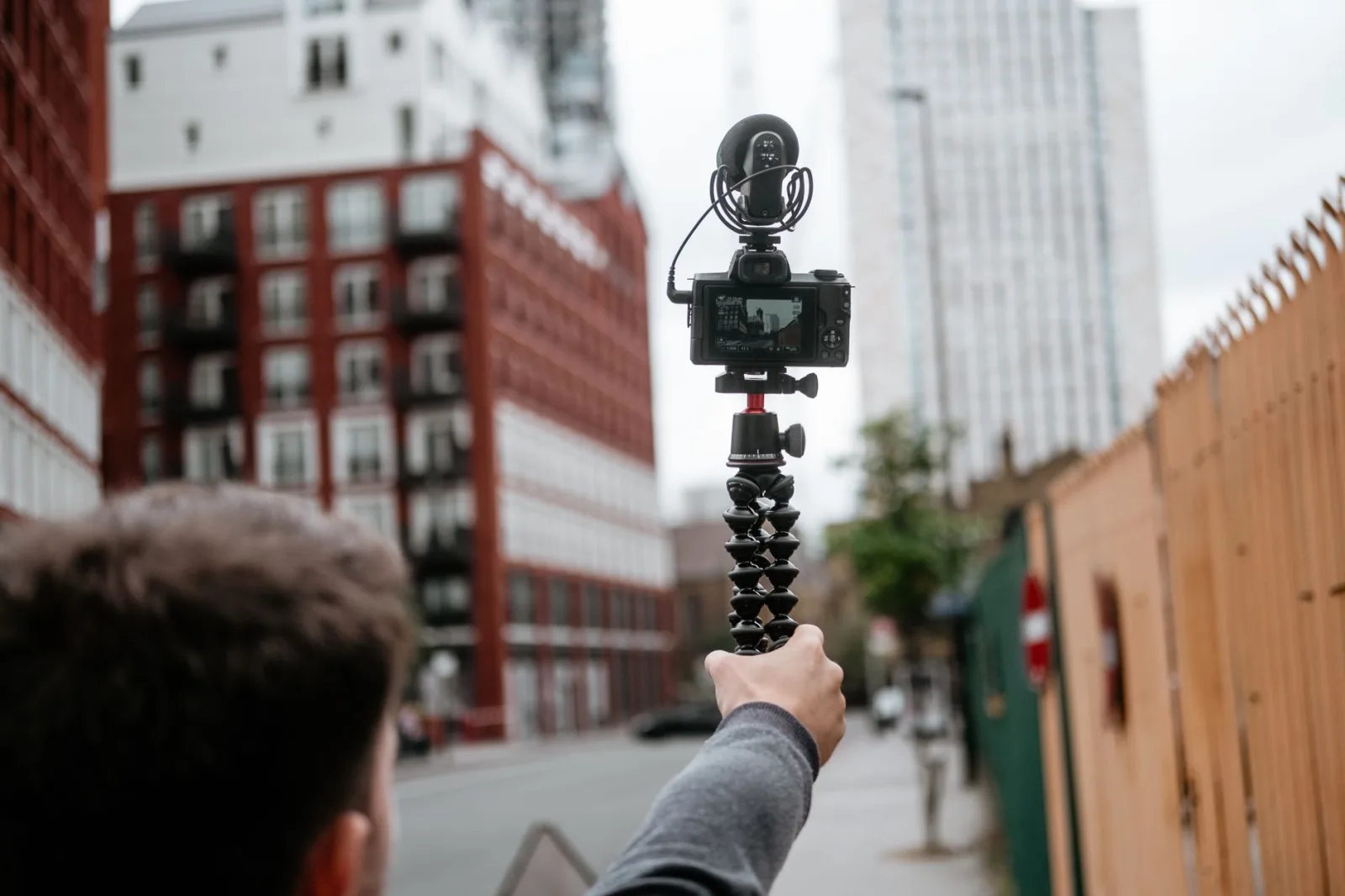
He went out in the morning with no paper and no plan. A vlog is spontaneous, he told himself, and a script kills spontaneity.
He filmed for four hours. The road, the café, the market, himself talking three times about three different things, his face laughing, his feet in the sand.
Then he sat down in the edit, opened the folder, and stared. Four hours with everything in it and nothing in it: no beginning that pulls, no question that carries, no ending. So he laid it out in the order it happened, which gave him an eighteen-minute video that people watched two minutes of.
The problem was not the filming, and not spontaneity. A vlog without a script is not spontaneous; it is shapeless.
A vlog is written as questions, not as lines
This is where the confusion starts. We assume a script means memorised lines, so we reject it for vlogs, and rightly so: memorised lines in a vlog are dead on arrival.
But a script is something else: it is the shape you pour the day into. And a vlog's shape is written as questions rather than sentences:
- What question does this video open in the first twenty seconds?
- What stops will it pass through?
- What changes in it between the beginning and the end?
- What is its answer at the end?
Four questions on one piece of paper before you leave the house. The rest belongs to life.
What you write before you leave
The question, in one sentence. Not "a day vlog in Jeddah", but "does anyone still actually live in old Jeddah?" or "what does a whole day in this city cost at its cheapest?" The question is what makes a viewer stay, and it is what stops you flailing in the edit.
Three stops, not ten. First place, second, third. A vlog with eight stops becomes a list of sightings rather than a story.
The opening line. Write it exactly, because it is the only moment worth memorising. Twenty words carrying the question, the place and the promise.
The closing line. And more important, know where it happens: where you will stand to film the ending. Anyone who does not know their ending films it exhausted in the car late at night, and it comes out flat.
What you do not write: conversations, impressions, what you will say on arrival. Writing those kills them.
A structure that works in any vlog
The opening (20 to 40 seconds): you are somewhere that belongs to the story, you say the question, and you make a specific promise. Do not begin with "hi everyone, how are you, so today hopefully".
The first stop: what you expected to happen. Easy, direct, introducing the place.
The second stop: where it gets complicated. An obstacle, a piece of information that changes the picture, someone saying something you did not expect. This is the most important stop, and the one most often cut by mistake in the edit.
The third stop: the answer or the discovery.
The ending (20 seconds): answer the opening question in one sentence, and stop. Do not summarise what the viewer just watched.
For the detail of holding attention across a long video, long-form video structure has the arcs and open questions in full, and pacing and transitions in a long script covers how to spread density between the stops.
The script page: this is what it looks like
One note on your phone, and that is all:
Question: does anyone still live in old Jeddah?
Promise in the opening: I go into three houses and ask who is inside.
Stop 1: the market in the morning. Shots + who do I ask?
Stop 2: the abandoned house. Obstacle: they may not let me in.
Stop 3: the man who stayed. Two questions for him.
Ending: I stand at the same door I started from, and answer.
Opening line: "This quarter has four hundred houses and eighteen residents. I went looking for them."
Eight lines you write in ten minutes, and they save you three hours in the edit.
Five shots no vlog goes without
Put them at the bottom of the page as a checklist, because forgetting them is what makes editing painful:
The opening in your own voice, in the place the story belongs to. Film it at the start of the trip, not the end.
Transitions. You leaving the door, getting in, arriving, walking in. Boring to film and impossible to edit without; skip them and the video jumps in a way that grates.
The honest moment. Stopping to say what you actually feel right then, with no performance, once per vlog. That moment is the one people remember.
The closing shot. Film it while you are still in the place, and before you are tired.
A minute of room tone with no talking. The most useful minute of your whole day, and you will want it under every scene.
On location: say the line before you film it
A small trick that changes the quality of your speech to camera: before you press record, say the line out loud to yourself once. Then film it. The second time is always cleaner, shorter and more honest.
A second trick: film one idea as one short take, rather than three minutes containing one idea. A vlog spoken in separate sentences cuts easily in the edit; a long continuous ramble is either kept whole or dropped whole.
What you write after you get back
Here is the step people skip and pay for: write the film on paper before you open the editing software.
Watch the footage quickly and write down what you actually got. Sometimes you discover the story changed, that the second stop turned out to be the whole story, and that your old question no longer fits. Adjust the question to match what happened, then build the order on paper, before a single clip goes on a timeline.
Three mistakes that kill a vlog
Blind chronology. What happened first is not necessarily what goes first. Order by story, not by clock.
Filming everything. Whoever films everything chooses nothing. Film the stops and the joins, and leave the rest.
The late opening. Thirty seconds of "morning everyone, I'm heading out now" ends the video before it starts.
Ten minutes before the door
Before you leave, sit down and write: the question, the three stops, the opening line, where the ending happens, and the five-shot list.
That is ten minutes. And the difference between it and walking out with no paper is the difference between a vlog watched to the end and four hours of footage that never becomes a video.