
Working and payment arrangements between individuals fall under different laws from country to country. What follows is a practical way to organise, not legal or financial advice.
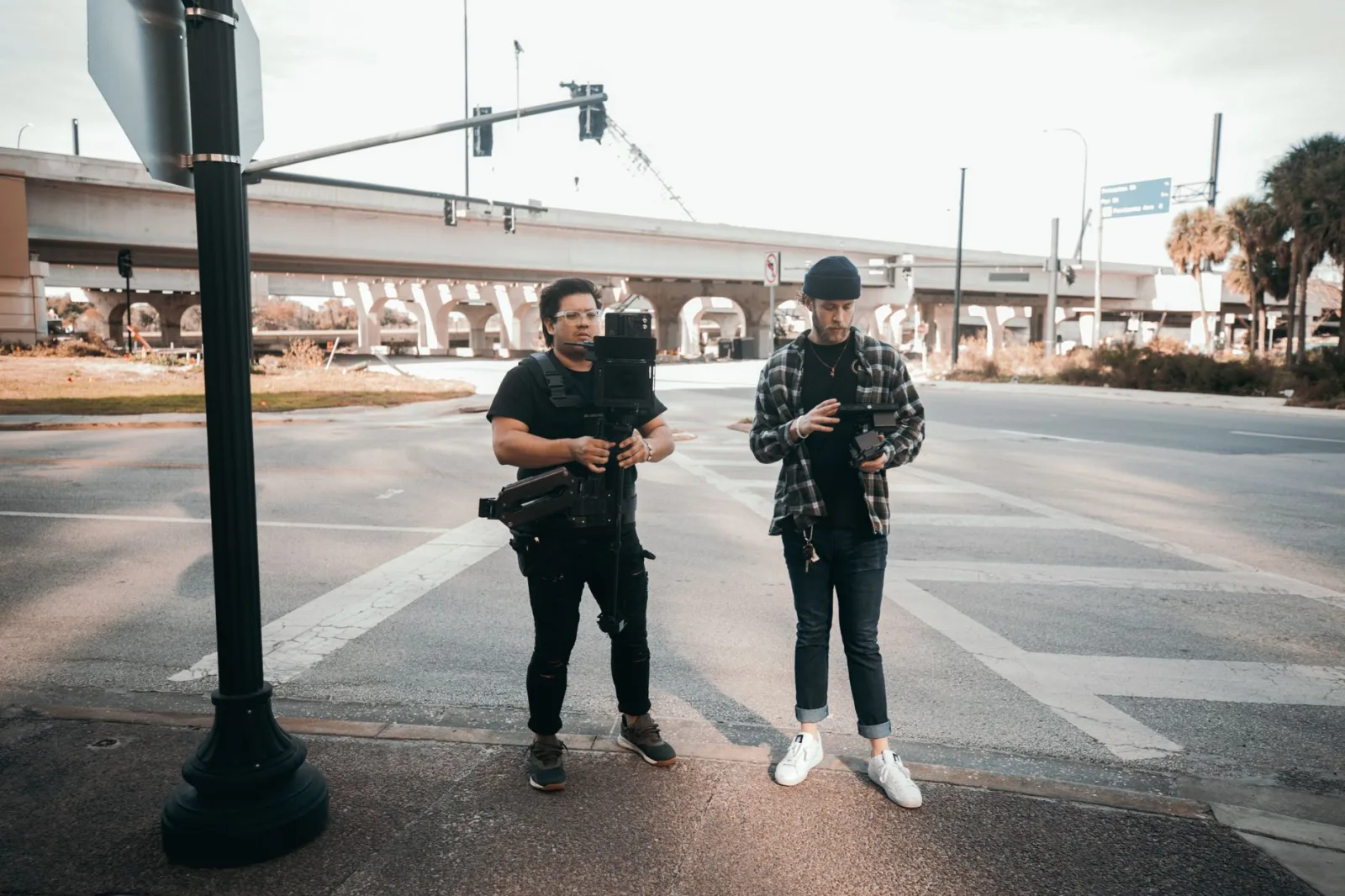
He travelled with a friend who came along to help him film. The first day was excellent, the second acceptable. On the third day the two of them were standing in the middle of a street, a bag in each of their hands, arguing about who was supposed to be carrying the tripod, and then about a bigger question: who decides whether we move on to the next place or keep filming here?
There was no artistic disagreement between them. There was an absence of arrangement, and half an hour of talking at the airport would have prevented all of it.
Why a small crew is harder than a big one
A big crew has a structure forced on it by numbers: a producer, a shooter, someone on sound, each knowing where their job ends. Two or three people look so simple that nobody raises the question of who does what, and everything is left to goodwill.
Goodwill lasts a day. After three days of short sleep, long walking and irregular meals, the smallest ambiguity becomes a problem. Arranging things is not a sign you distrust the person with you; it is so you never have to negotiate while you are both exhausted.
Filming alone has its own set of problems, which we set out in filming alone in a country you don't know. A small crew solves some of them and creates others.
Three roles are enough
You do not need long job titles. You need each person to know what they are responsible for, and what they are not.
Picture. Whoever holds the camera and decides the frame and the exposure. They are the one who says when a scene is visually complete.
Sound and gear. Whoever watches the levels in the headphones, keeps track of batteries and cards, and knows where everything is in the bags. This role is always underrated, and its absence is the single biggest cause of lost scenes.
People and the route. Whoever talks to the owners of a place, asks permission, asks for directions, and explains who we are and what we are doing. In a country that is not yours, this role makes half the film.
In a crew of two, one of you takes picture and the other takes sound, gear and people together. In a crew of three, one role each. The roles can swap between days if you like, but inside a day they stay fixed.
During preparation it helps for the whole crew to go over what you know about the place, in the way we described in what should you know about a place before you arrive, so that the mental picture is not held by one person alone.
One decision that does not get divided: whose film it is
Everything can be discussed except this. One person holds the final call on whether we film this or leave it, when we move, and what story we are telling.
This is not about preferring one person over another, it is a practical necessity. On the ground, chances come past that last two minutes, and there is no time for a vote. A crew that does not know who decides spends those two minutes discussing.
Say it plainly before you travel: this is so-and-so's film, and the final call on a scene is theirs. Anyone who accepts that travels at ease, and anyone who does not had better say so before the booking rather than on day three.
In return, the person who holds the call owes something: explaining the reason in one sentence rather than only issuing instructions, and hearing a suggestion out before refusing it.
Half an hour in the morning saves a day
Before you go out each morning, sit for half an hour with coffee and run through four lines:
- What are we filming today? Three required scenes, not ten.
- Which scene are we not coming back without? One only, and it sets the day's priority.
- Who is carrying what? A quick spoken decision is enough.
- When do we finish, and where do we meet if we separate? With a named meeting point and a time.
At the end of the day, five minutes only: what we shot, where the files are, and what batteries tomorrow needs. We set out the structure of trip days in the shooting trip schedule, and a small crew needs it more than a solo shooter does, because ambiguity now hits more than one person.
Who carries what
Hand out the bags on the basis of who needs a free hand, not who is strongest:
| Item | Who carries it | Why |
|---|---|---|
| Camera and the lens in use | Picture | It has to be ready in a second |
| Other lenses, batteries, cards | Gear | One bag that only opens through one person |
| Mics, recorder, headphones | Sound | What you use stays with you |
| Tripod | Whoever's hands are freest at the time | A tripod is a travelling burden by nature |
And agree one rule: nobody takes anything out of someone else's bag without saying. Most of what goes missing on a trip goes missing that way.
It is also smart to spread the critical items across more than one bag, so that the batteries and cards are not all with one person, as in the two-bag rule we explained in travelling with your gear.
Costs: a written agreement before you book
This is the part that ruins friendships, because it always gets left until later. Write it before anything is booked, in one message everyone can see.
Split the spending into three kinds:
Shared. Accommodation, local transport, permits, the local fixer. Divided equally, or by a share you agree.
Personal. The ticket, whatever food each person chooses, their own gear. Each person covers themselves.
Work. If one of you is working for somebody, that is a contract and not companionship. Agree it explicitly, and the most important clause in it is what each person owns of the footage and the edit after the trip.
And the clause that always gets forgotten: what happens if the trip is cancelled or somebody drops out? Say now who carries the cost of a non-refundable booking. Three sentences in the first agreement are cheaper than a falling-out two months later.
Agree too on who owns the footage and the right to use it, which is a subject worth reading who owns the footage? on before you leave.
Friction is expected, so leave it an exit
On a shoot trip you are together in the room, the car, the scene and the meal. That is an unnatural amount of closeness, and a little friction inside it is entirely normal.
Three habits lower the pressure:
An hour alone each, every day. Walking, sleeping, calling home. Not a luxury.
No work talk over food. Leaving one slot a day free of the job protects the whole trip.
Whoever is tired says so. The most important rule: tiredness is announced rather than hidden, and a scene filmed by three exhausted people comes out worse than a scene cancelled.
And if a real disagreement happens, postpone settling it to the end of the day. Most mid-shoot disagreements disappear after dinner and sleep.
What a small crew actually buys you
The reason for all this arrangement is that a small crew gives you what being alone cannot: clean sound because somebody is watching it, shots of you actually working, somebody talking to people while you film quietly, and a witness who sees what you cannot see from behind the camera.
All of that is lost if you spend your energy negotiating what should have been settled at the airport. Half an hour of arranging before you travel buys three days of calm work.