
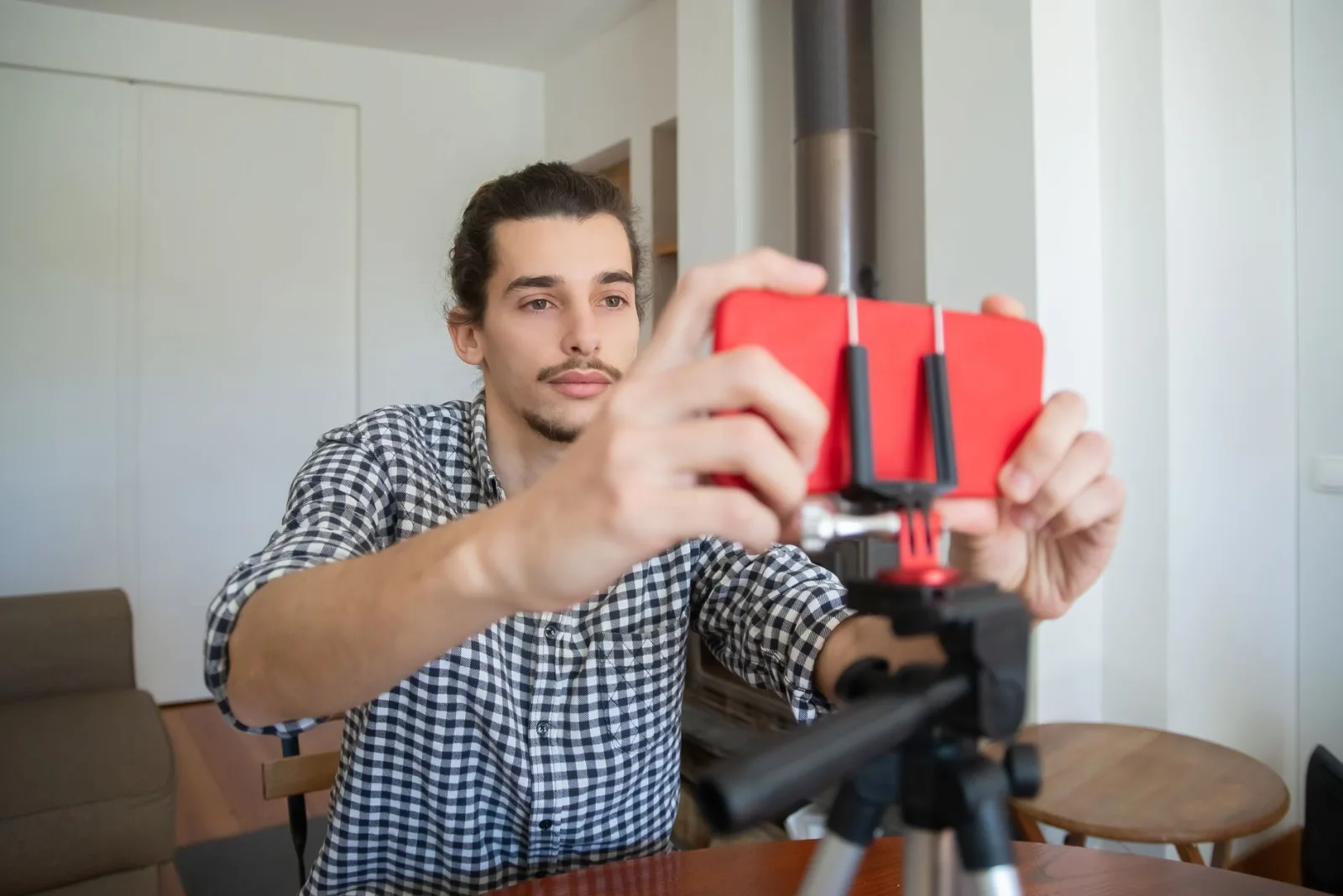
At dinner he said he had started a YouTube channel. Someone asked, "and the job?" Someone else said, "so you're going to be famous?" and the rest laughed a laugh that was neither cruel nor kind. Two weeks later the first video reached the friends group, and under it came three messages and two laughing replies. He unlisted the video that same night and published nothing for four months.
He did not stop because the video was bad. He stopped because the first audience to see it was the worst possible audience: people who know him and do not know what he is doing.
Why they really mock
What helps is understanding that the mockery is usually not about you or about your ability:
- A stored image. The word "YouTuber" calls up in their minds people shouting at a camera. They are not mocking you, but a picture in their heads that does not resemble you.
- Worry wrapped in a joke. Whoever asked about the job is afraid for you, on a road whose end he cannot see, so he said what people say instead of saying he was worried.
- Discomfort with the camera itself. Most people around you freeze in front of a camera, and someone who sees you doing what frightens him treats his own unease with a comment.
- A feeling of being material. Some people at home are afraid of ending up in a video without anyone asking them. That fear is legitimate, and we will come back to it.
None of these reasons needs persuading from you. Three of them fade with time, and the fourth fades with a clear agreement.
One sentence is enough
The biggest mistake in the first month is explaining. Explaining opens a debate, the debate makes you defend, and defending turns your project into a dinner-table issue.
The sentence that is enough: "I have started learning filming, editing and writing, and I publish what I learn on a channel." That is honest, it promises nobody anything, and it asks for no approval. If somebody then asks about view counts, answer in a short sentence and move to something else.
Three things not to do:
- Do not promise numbers or dates. "In a year I'll have a hundred thousand" hands them a ruler to measure you with.
- Do not ask for views or opinions. The opinion of someone who loves you is not information.
- Do not make your first videos about them. Not about the house, not about the family, not about your friends.
Keep three circles apart
| The circle | What you give it | What you do not |
|---|---|---|
| Home | One sentence, and an agreement on what gets filmed and what does not | Numbers and plans |
| Friends | That they know, if you want | A link to every video, and requests to share |
| Audience | All of your work | Anything from your life you have not decided to publish |
Mixing these circles is the root of the exhaustion. The third is the one you are building, and the first two are neither your audience nor your measure of success. Whoever uploads a video and sits waiting for the second circle to respond has judged his own work by the worst available standard.
And anyone who would rather start without appearing at all is free to, and the routes are in Do You Have to Show Your Face in Your Videos?. That is a production choice rather than an escape, and avoiding what people say should not be its only reason.
When the objection is real
Here is an important distinction: not everything you hear is mockery. Some of it is an objection that deserves respect and an agreement rather than dismissal.
If your mother says she does not want her voice in a video, or your brother asks that his face not appear, or a friend refuses to be in a clip, that is entirely their right. The rule in Filming Other People: Permission and Respect applies at home before it applies to strangers, and most family disputes about channels come from a video that included somebody without asking.
A three line agreement settles all of it: which rooms I film in, who appears and who does not, and that any clip with one of you in it gets seen by you before publishing. People who know this relax, and their comments drop off within a month.
Your first ten videos are for you, not for them
In the first months of a channel, your work is practice rather than performance. You are learning four crafts at once, and whoever measures his practice by the eyes of onlookers stops in week three.
Set yourself a measure nobody else sees: how many videos you published, whether execution got easier, and which format you enjoyed. The ordered plan is in Your first ten videos: what do you film, and why not start with your best idea?. And if your channel's subject is still unsettled, the three circles are in How Do You Choose Your Channel's Topic?.
What happens after six months
In the experience of most people who kept going, the order runs like this: comments and jokes for the first two months, silence in the third and fourth, and after half a year somebody asks you a technical question. "How do you do the editing?" That is the turn. It does not come from persuasion. It comes from their having watched you continue without arguing.
The people around you learn nothing from your talk about the project. They learn from the fact that you are filming at seven every Saturday morning. Continuing is the one argument that has no answer, and the way to continue without burning out is in How Do You Keep Publishing Without Burning Out?.
And if home is genuinely heavy
In some households this is more than joking, and every video becomes a battle. In that case lower the visibility rather than the ambition: film outside the house, publish with whatever privacy you want, and hold the conversation until you have work that speaks for you. When you do have something to show, show it first to whoever is glad for you.
And do not make the recognition of the people around you a condition for continuing. The first person who needs to see that you are improving is you, and the nearest evidence is your first video seen after ten more.