
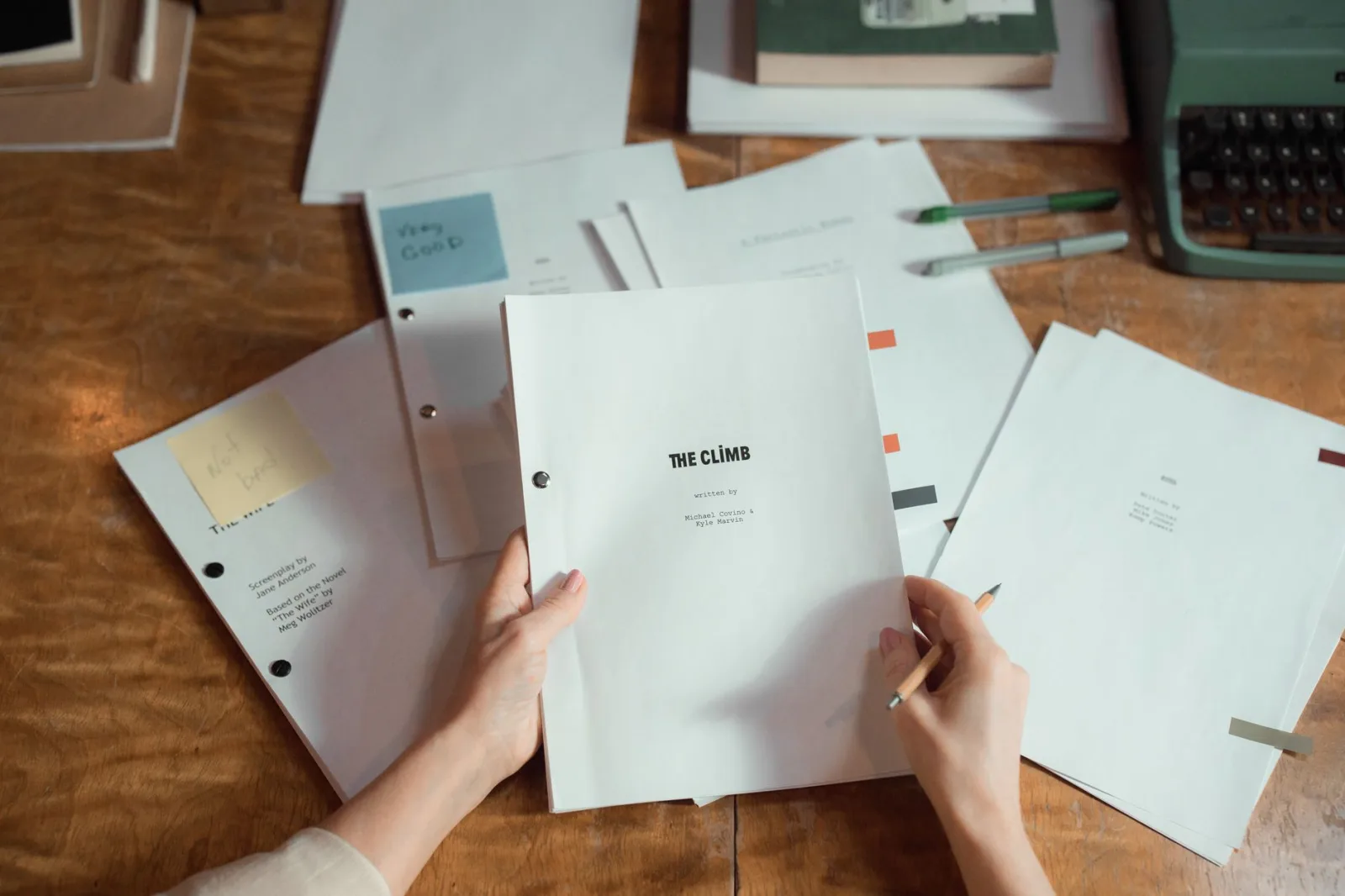
He wrote the script over two evenings and was pleased with it: an ordered idea, tight sentences, and a closing paragraph he liked.
On the shoot day the presenter stood in front of the camera and began to read. By the second minute he was stumbling over a long sentence; by the fifth he had repeated it four times; by the tenth he said: I do not talk like this.
The script was not bad. It was a good script for somebody else: for its writer.
That is the fundamental difference between writing for yourself and writing for another person. When you write for yourself, you know yourself without thinking. When you write for him, his voice is material you have to gather before you write a word.
Half an hour before writing
Do not start from the subject; start from the voice. Half an hour is enough:
1. Listen to him for twenty minutes. His old videos, an audio clip, or a call with him. Take notes not about his ideas but about his manner.
2. Transcribe three minutes of his speech word for word. This is the single most useful step in this article. A literal transcript shows you what you do not hear: that he opens sentences with "let's have a look", that he never finishes a sentence past twelve words, and that he laughs before he states an opinion plainly.
3. Write three lists. His habitual phrases, words he never says, and the length of his breath in a sentence.
4. Ask him two questions. What do you never say in your videos? And what was the last video where you felt like yourself? The second answer gives you a reference to measure every line against.
Four rules in the writing itself
Speakable sentences rather than readable ones. A sentence that looks handsome on paper may not be sayable in one breath. The only test: read every line aloud as you write it. Whatever trips your tongue will trip his.
Breath length to his measure. If he speaks in short sentences, do not write him a continuous paragraph. If he tends to run on, do not chop every line.
His vocabulary. A word you love that he never uses will come out of him cold. In every script I write two alternatives in the margin for any word he may not be comfortable with.
Do not put an opinion in his mouth that is not his. This is the most dangerous point. If the script carries a judgement or a position, ask him before you write: do you actually say this? A presenter voicing an opinion he does not hold is heard as cold, and he is the one who carries the consequences after publication.
Performance notes rather than directions
A script that gets spoken needs two layers: the words, and a brief note beside them. Write the note in brackets and in two words, not as a long directorial sentence:
| What you write | What you do not write |
|---|---|
| (pause one second) | (please slow down here because the sentence matters) |
| (smile) | (be warm and welcoming in this part) |
| (faster here) | (this part is informational so please adjust your pace) |
| (in your own words) | (explain this however you like but keep the general meaning) |
Too many notes make the presenter feel managed rather than presented. Three notes a page are more useful than twelve.
Leave places where he says it his way
A script locked word for word from the first line to the last comes out dead. The answer is to mark three kinds of place:
- Written verbatim: the opening, figures and names, and any part carrying rights or disclosure.
- Written as meaning: "here you talk about your experience with X in two sentences".
- Left to him: "your answer to this question however you like".
The proportion that usually works: opening and closing verbatim, and the middle as meaning and bullet points.
How he reads: prompter or notes
Ask him before the shoot which he prefers, because the script is written differently for each:
- A prompter: short sentences, lines of no more than six words, and few brackets.
- Notes on paper: bullet points of three words each, not a full text.
- Memorising: passages of three sentences with headings, so he memorises meaning rather than text.
The differences between the three and the price of each are in Teleprompter, memorising or speaking freely: which suits you in front of a camera?.
Delivery: three things that prevent revision rounds
Deliver in an editable format. A file he can write in and comment on, not an image or a locked document. An edit he makes himself is faster than three messages.
Ask for a read-aloud the day before the shoot. Fifteen minutes in which he reads the whole script and marks whatever trips him. That session removes most revision rounds, because the tongue reveals what the eye does not.
Agree the number of rounds in advance. One round on structure, one on phrasing, and anything beyond them is counted. That is one of the terms to settle before any job, and pricing it is in How Do You Price Your First Paid Collaboration?.
And if the work is for a brand
When you write for a presenter representing a brand, you have three parties: the writer, the presenter, and whoever is paying. The usual clash is between "what the client wants said" and "what this presenter can say honestly".
The answer is to write the mandatory messages clearly in their place, and leave the rest in the presenter's voice.
Review with a reader's eye, not a writer's
Before delivering, go through the script in four separate passes as in Revising a Long Script: How to Cut the Excess With a Critical Eye, and add a fifth pass specific to this kind of work: read it aloud imitating the presenter, and mark every sentence that feels like it is not his.
The structural mistakes that recur in scripts apply here as much as to what you write for yourself, and they are in Seven Common Mistakes in YouTube Video Scripts. The question of pacing, in a script you will not be performing yourself, is in Pacing and Transitions in a Long Script.
And the standard you judge yourself by
It is not that the client likes the script, nor that you like it. The standard is that people watch the video and say: he talked today about such and such. Whoever hears them say that has succeeded, because the best writing for somebody else is the writing where the writer never shows.