
Permission and privacy rules differ greatly between countries, and some impose specific conditions, especially on filming children. What follows is a practical arrangement rather than legal advice, and for any large commercial job or real dispute, ask a specialist in your country.
He filmed the man in his workshop and asked before starting, and the man said: "fine, go ahead." The film came out well and was published.
Seven months later a message arrived: the man wanted the video taken down. He said he had not understood that the video would be seen by hundreds of thousands, nor that it would stay up for years, nor that it would appear in other countries. And he was not lying, because he genuinely had understood none of that, since nobody had told him.
Had there been a ten-line page between them, the conversation would have been entirely different, and the man would have known what he was agreeing to before he agreed.
The form is not protection from him; it is clarity with him
This is the most important point here. Many people imagine a release as a weapon protecting the filmmaker from the subject, and that misreading makes the form feel threatening and spoils the relationship.
A release is a document of clarity: it tells the person in front of you exactly what will happen, and gives you evidence that you said it. It protects both sides: it protects you from a takedown request a year later, and protects them from their face being used in something they never agreed to.
The ethical side that comes before the paperwork, and what makes consent real consent, is in filming other people: how to ask permission and respect their privacy.
Eight items on one page
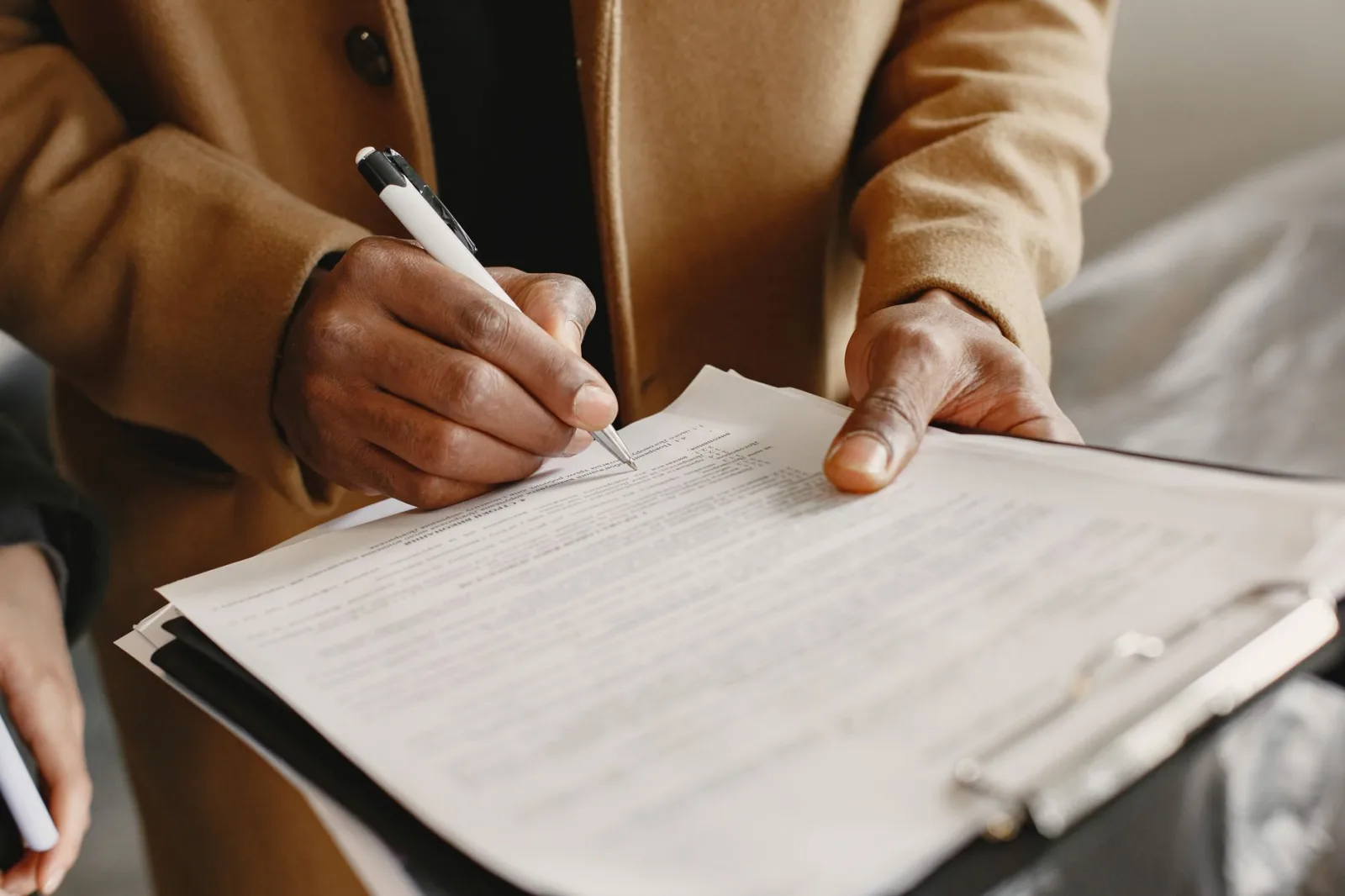
You need no more than a page. These eight items are enough for most creators' work:
1. Who you are and what the project is. Your name, the channel's name, and a one-line description of the project.
2. Where it will be published. The name of the platform or platforms, and that the video is public and anybody can watch it. Do not write "for internal purposes" if it will be published.
3. What the permission covers. Image, voice, their name if you use it, and still frames from the material if you will use them in a thumbnail or a post.
4. How long it will be used. The realistic wording: that the video stays published for an indefinite period, because that is the reality. Wording that says "one year" traps you, because you will not delete the video after a year.
5. Whether there is any payment. If there is a fee or compensation for time, write it. If there is not, write that participation is voluntary and unpaid, which is clearer than silence.
6. The right to object and how to reach you. Your email or number, and a sentence saying they may ask you to review or remove a section, and that you will consider their request. Do not commit to automatic deletion; commit to listening.
7. What you will not do. One reassuring sentence: that you will not use the material in a third party's commercial advertising, and will not sell it to another body, if that is true. That sentence reassures people more than anything else.
8. Their name, signature and the date. And the name in their handwriting, not yours.
Write it in their language, not a lawyer's
A form that is not understood is worth nothing even signed, because what you want is informed consent rather than a signature.
So write it in plain phrases: "the video will be available to anybody on [platform]", not "the first party shall be entitled to exploit by all available means". And read it aloud with them before they sign; it takes a minute and settles everything.
And if they do not read, read it to them word by word, and ask for recorded permission by voice or camera in addition to the signature.
Three forms of permission on the ground
You will not be carrying paperwork in every situation. These three suit different cases:
1. The signed page. The strongest, and it suits interviews and the main people in your film, and anybody whose face appears and who speaks.
2. Permission recorded on camera. You start the camera, tell them what will happen, and ask: "do you agree that I film you and publish the video on X?" and they answer. Twenty seconds at the head of the file is worth a page in many cases. Keep that clip and do not delete it with the rest of the material.
3. A written message after filming. For informal cases: you send a message saying "thank you for letting me film today; the video will be published on X." And their reply of "fine" is written evidence with its date.
The second is the most practical when travelling, because it needs no printer and no pen.
Children: no slack at all
A child's permission is not theirs. The permission is the father's, the mother's or the guardian's, directly, not through an intermediary, a school, or whoever is accompanying you.
And three further rules:
- Ask for permission before filming, not after.
- Do not give the child's full name, their school, or their neighbourhood.
- If the child themselves is uneasy or unwilling, do not film them even if the parents agreed.
And in public places, a wide shot in which children appear incidentally is a different matter, governed by the rules of the place, which is set out in filming in public places: what to know before you go.
When you do not need a form
You do not need a form in every case, and carrying one everywhere makes you look like an official body and costs your work its ease. You usually do not need it for:
- Wide shots of a public place where people appear incidentally.
- Hands working, with no face and no name.
- Somebody passing through the frame unrecognisably.
- The sound of a market or a place's ambience.
And you do need it when the person is identifiable, or speaks, or is named, or when you enter their home or workplace.
The way that frightens nobody
The worst way to produce a release is to pull it out after half an hour of talking, so it feels as if something legal is happening. The way that works:
Mention it in the first minute along with everything else you explain: "there is a small page saying what we are doing; we will read it together and then get on."
Keep it to one page in large type. Three pages in small type make anybody hesitate.
Sign it yourself too. A page with two signatures looks like an agreement; one with a single signature looks like a surrender.
Give them a copy. Photograph the page with your phone and send it to them, or carry two copies. Somebody who holds a copy is at ease.
And all of this sits inside the trust-building set out in how do you build trust with the person you are filming before you raise the camera.
After filming: how to file the paperwork
A form you lost is worth nothing. So do this on the same day as the shoot:
- Photograph every page with your phone immediately.
- Put it in the project folder named with the person's name and the date.
- Write a table in one file: who appeared, which form of permission, and where the file is.
- Keep recorded-permission clips with the forms rather than with the rest of the material.
That table is what you open two years later if somebody asks, and it is what makes the answer a minute rather than a day.
If somebody asks for removal after publication
Here is a stance that protects both the relationship and the work:
Listen first and ask what exactly troubles them. Most requests concern a section rather than the whole video.
Offer middle solutions: cutting a sentence, blurring a face in one place, removing a name.
Go back to the form not to brandish it, but to remind yourself what you actually agreed.
And remove it if the request is serious and understandable. A person's face matters more than a video, and a filmmaker known for respecting that gets doors opened that stay shut for others.
In short
One page, eight items, written in a language the person in front of you understands, and read aloud with them. And while travelling, twenty recorded seconds replace a printer. A release is not protection from people in the end, but a way of telling them what will happen before it happens.