
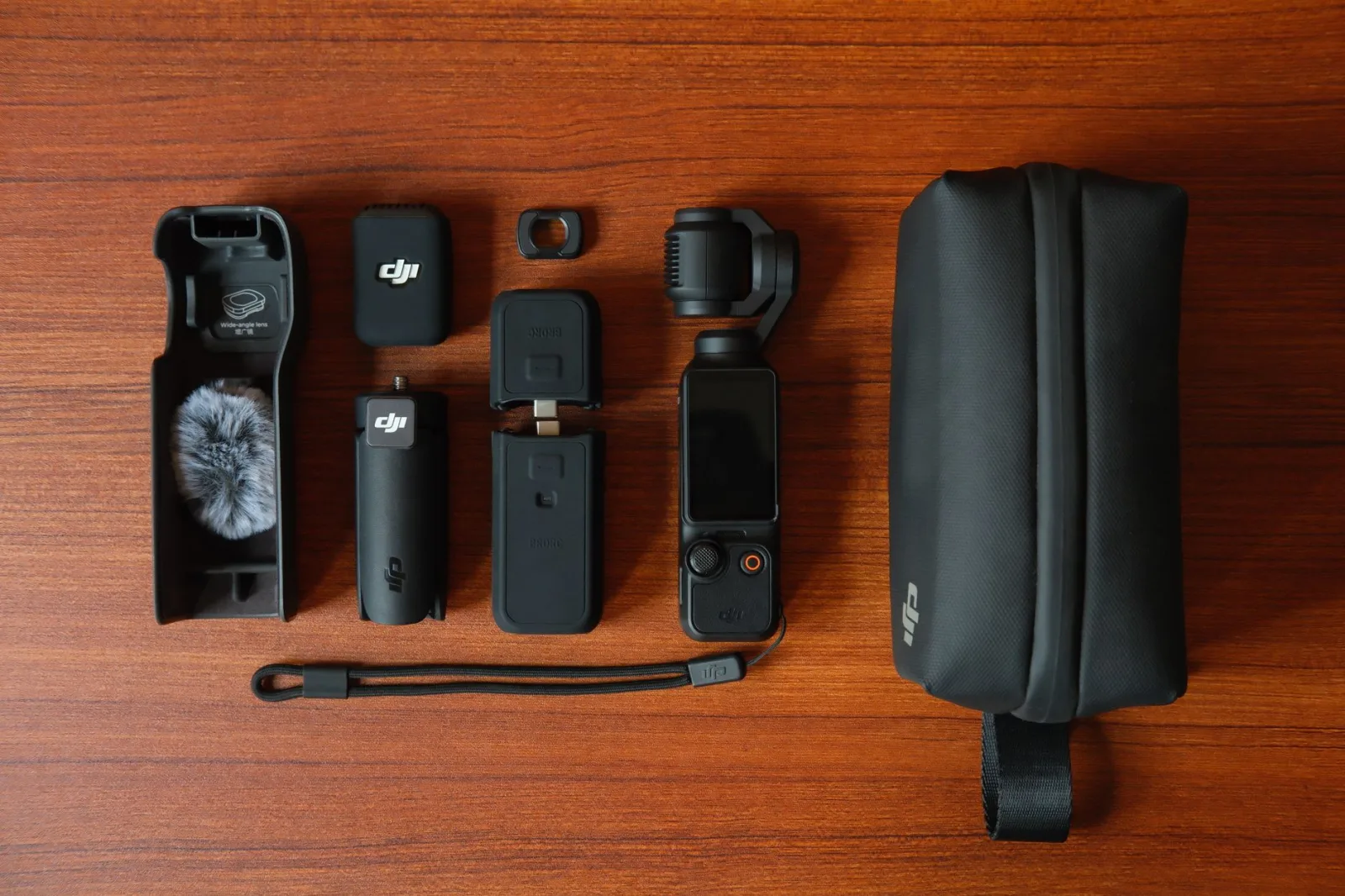
He arrived at the workshop exactly when he had planned. The light in its window was everything he had hoped for, the man he had come for had cleared half an hour, and the story was ready.
He opened the bag, raised the camera, pressed record, and one sentence appeared on the screen: no memory card.
The card was in the card reader, on his desk, at home, since last night.
The man did not offer him another half hour. And all that planning collapsed because of a piece the size of your finger.
A checklist is read, not remembered
Nobody remembers everything while rushing in the morning. The people who never forget do not have better memories; they have a list they run their eyes over.
Keep it as a pinned note on your phone or a card in the bag itself, and split it into three layers so you are not carrying everything every time.
Layer one: what never leaves the bag
These live in the bag permanently and are never taken out:
- Camera and lens. Whether one lens or two is a decision we covered in choosing the lens you shoot most of your work on.
- Two memory cards, one of them always empty.
- Two charged batteries at minimum.
- A microphone suited to how you film, with its cable.
- A tripod or gimbal, even a small one.
- A microfibre lens cloth.
- A bag that protects its contents if it falls.
- A small pouch for the little parts: tripod screws, adapters, ties.
Layer two: a long day away from home
Added when the shoot runs beyond a couple of hours or away from power:
- A power bank and charging cables.
- A third battery or a car charger.
- A third card, because a long day fills more than you expect.
- Water and something to eat. Hunger ends a shoot day sooner than a flat battery.
- Small headphones to monitor audio while filming, which is what most often prevents a sound disaster.
- Wind protection for the mic, because wind ruins outdoor recording more than anything else, and its cures are in recording audio outdoors: wind, noise, and what can't be fixed.
Layer three: travel
Travel is its own calculation, and its main items are power, backing up on the road, safety and what you can film alone, which we gave a whole article to in filming alone in a country you don't know.
Add one item here that must not be forgotten: a drive or laptop to offload files every night. A full card in a foreign country is a problem with no solution in the morning.
Five things always forgotten
These are exactly the ones you hear stories about from every filmmaker:
The card reader. The most famous omission, because it stays in the computer after offloading. Give it a place in the bag and return it there immediately.
The adapter. The charging cable that does not fit the camera's port, or the plug adapter if you travel.
The lens cloth. A fingerprint on the glass ruins every shot of the day, and is only discovered in the edit.
A plastic bag. Cheap, and it protects the camera from sudden rain, dust or spray.
Small change. For parking, for entry somewhere, or to thank whoever helped you.
The weight rule: every item pays rent for its space
A heavy bag makes you film less, move less, and finish earlier. What gets carried most uselessly: a third lens, a large tripod, and "spare" gear that has never been used once.
So ask of every item before it goes in: did I use it on the last three shoots? If not, leave it, unless it is a battery, a card or a backup, which get carried even unused.
The night-before ritual: twenty minutes
Do this the night before rather than in the morning, because mornings make you forget:
Charge everything: camera batteries, the mic, the power bank, the phone. One rule: nothing sleeps in this house less than full.
Offload and format the cards in the camera. Do not transfer files in the morning.
Run your eyes over the list, item by item, touching each one in the bag.
Set the camera in advance: frame rate, shutter speed, the white balance you expect. So that a fast moment in the field finds you ready.
Set an alarm and write a note with the arrival time, who you are meeting and their phone number.
Where things live: fixed pockets
Give everything the same place every time: cards in the small front pocket, batteries in the right-hand pocket, cables in one pouch, the mic in one place.
The benefit is not tidiness but that one touch tells you something is missing, without emptying the bag onto the pavement.
The return checklist: five minutes
Forgetting on the way back is more dangerous than forgetting on the way out, because it costs data rather than time:
Offload the files to the drive, and check they actually open. Then put the batteries on charge. Then return every item to its pocket. Then put the card reader back in the bag.
Five minutes on your return leaves the bag ready for the next shoot with no preparation at all.
Write it now
Open a note on your phone, copy layer one as it is, and add whatever is specific to your own filming.
The difference between those who forget and those who do not is neither experience nor gear; it is a page read in a minute before the bag is closed.