
He followed the platform's own page, saw a new promotional ad, and at the eleventh second there was a clip from his own video. Three seconds of a shot he filmed on a trip, with no name on it and no permission anybody asked him for.
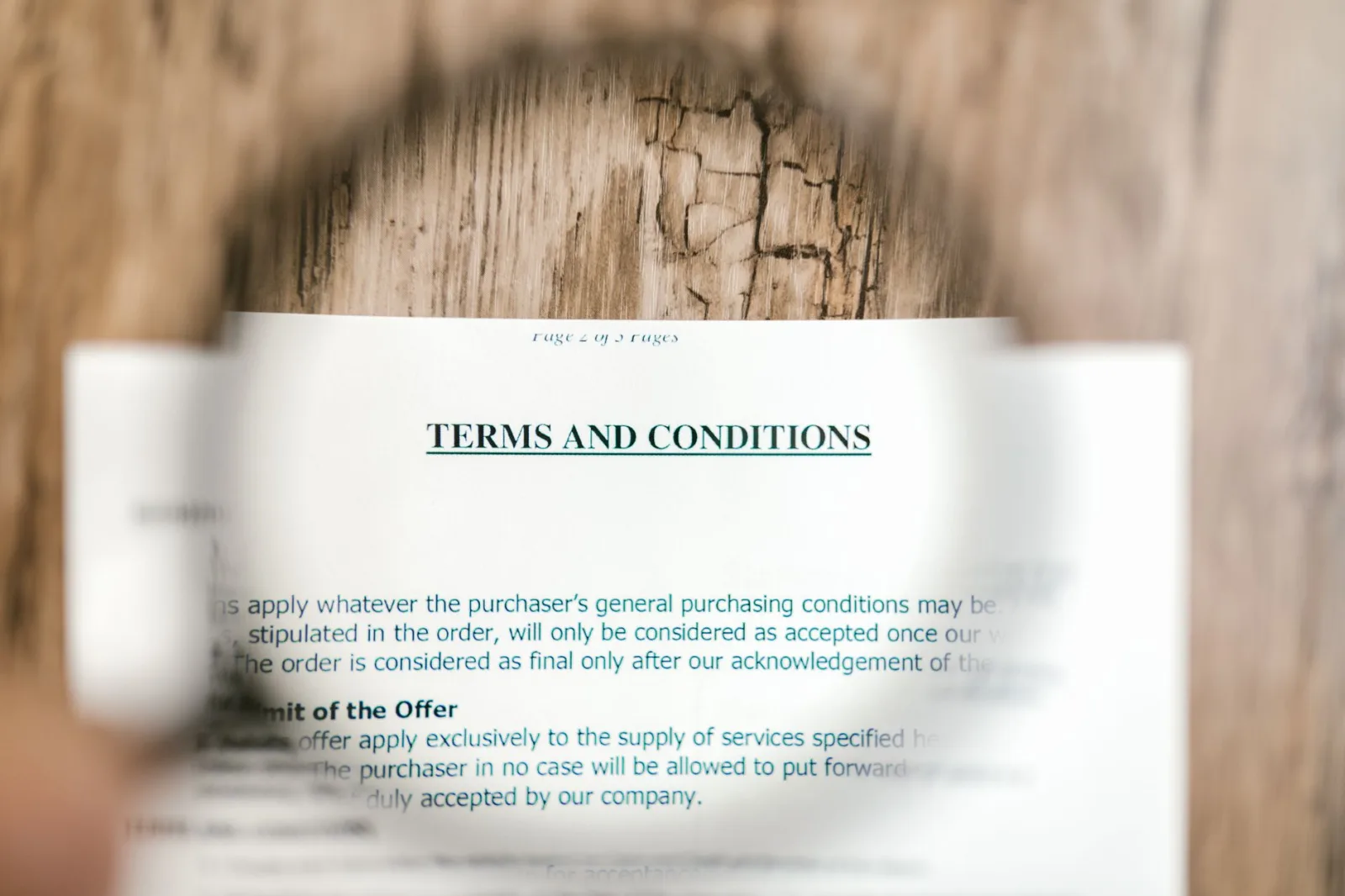
He wrote to them, annoyed, and got a polite reply with a link to a paragraph in the terms of service. He read it and found he had agreed to exactly this the day he created the account, four years earlier, in the second he pressed "I agree".
What happened was neither theft nor an error. It was a clause somebody other than him had read.
Terms differ between platforms and change over time, and what follows is a way of reading them rather than a quotation of any particular clause. Open your own platform's current terms and read them yourself, and for anything large ask a lawyer in your country.
You are the owner, but you granted a licence
That sentence resolves half the confusion. Uploading does not transfer ownership to the platform. You remain the copyright holder, and you can publish the video elsewhere, sell it and deal in it as you like.
But in exchange for the service you grant the platform a licence to use it. The difference between ownership and licence is the whole difference, which we covered in another context in Who owns the footage? The practical question is not "do I own my video?" but "what are the limits of the licence I gave?"
Five clauses to read on any platform
Do not read the whole document. Search the page for five words and read what surrounds them:
| Search for | What it tells you |
|---|---|
| licence | What the platform may do with your content |
| sub-licence | Whether it can pass that right to other partners |
| advertising | Whether ads run on your content and how |
| termination or deletion | What happens to your content after you delete the account |
| disputes | Where and how any dispute between you is resolved |
Five words in ten minutes give you a clearer picture than most people who have worked on the platform for years.
What the recurring phrases mean
"Non-exclusive licence": you can publish the same video somewhere else. That is good for you, and it is what makes multi-platform publishing possible.
"Transferable and sub-licensable": the platform can pass the right of use to another party it works with. That is the clause that surprised our man.
"Worldwide and royalty-free": no geography limits the use, and no money flows to you for it outside the announced monetisation programmes.
"For operating, developing and promoting the service": promotion is the wide word here, and under its umbrella comes showing your clip in an ad for the platform.
The platform is not your archive
The clause nobody reads is the termination clause. On most platforms: your account may be suspended or deleted by their decision, your uploaded copies are not guaranteed to persist, and the copy you download afterwards is not the quality you uploaded.
So keep, for every video, a master file at original quality, the script or transcript, and the thumbnail with its source. That is your real archive; the platform is a shop window rather than a cupboard. The full logic is in Don't Depend on One Platform.
What no clause protects you from
The licence you granted does not cover what was never yours. Upload a video with unlicensed music, or a clip from somebody else's work with no right to it, and you carry the liability rather than the platform. The rules for using others' material are in Using Clips From Someone Else's Content: When and How.
The same goes for the rights of whoever appeared in frame. The terms govern your relationship with the platform; they do not govern your relationship with the person you filmed. That is a separate relationship needing the release form.
In paid work, read both documents together
When you agree with a brand, the contract may ask for something the platform's rules forbid: hiding the advertising disclosure, or granting the brand an exclusive right over a video published on a platform that already took a non-exclusive licence from you.
So read what you give the brand in light of what you gave the platform before you sign, and put the key terms in writing as in What to Agree On Before You Film Any Paid Job.
AI and data
Many platforms have added clauses in recent years about using content to develop their systems, and some offer the account holder a setting while others do not.
The work here is simple: open your account settings, look for any option covering this, and decide for yourself. If there is no option, know that this is the price of publishing on that platform, and factor it in if your material is sensitive or belongs to a subject you want to keep.
Five practical steps today
- Keep master copies of every published video, in two places.
- Record the first publication date of every work; it is your evidence if it gets copied, and the course of action is in What to Do When Someone Copies Your Content.
- Read the notices about changing terms instead of deleting them, since continued use is what makes a change apply to you.
- Do not upload what you do not hold rights to, even as a private or unlisted video.
- Check your privacy and data settings once every six months.
And if you want out
Before deleting an account, download your data from the platform's export tool, record your important links, and keep your subscriber list if the platform allows. Most people who delete an account discover they lost years of comments, which are part of their work rather than part of the platform.
And the most important line in all of this: the terms are not a distant legal detail. They are the contract governing the place where you put years of work. Read five words in it once, keep your own copies, and work with an easy mind.