
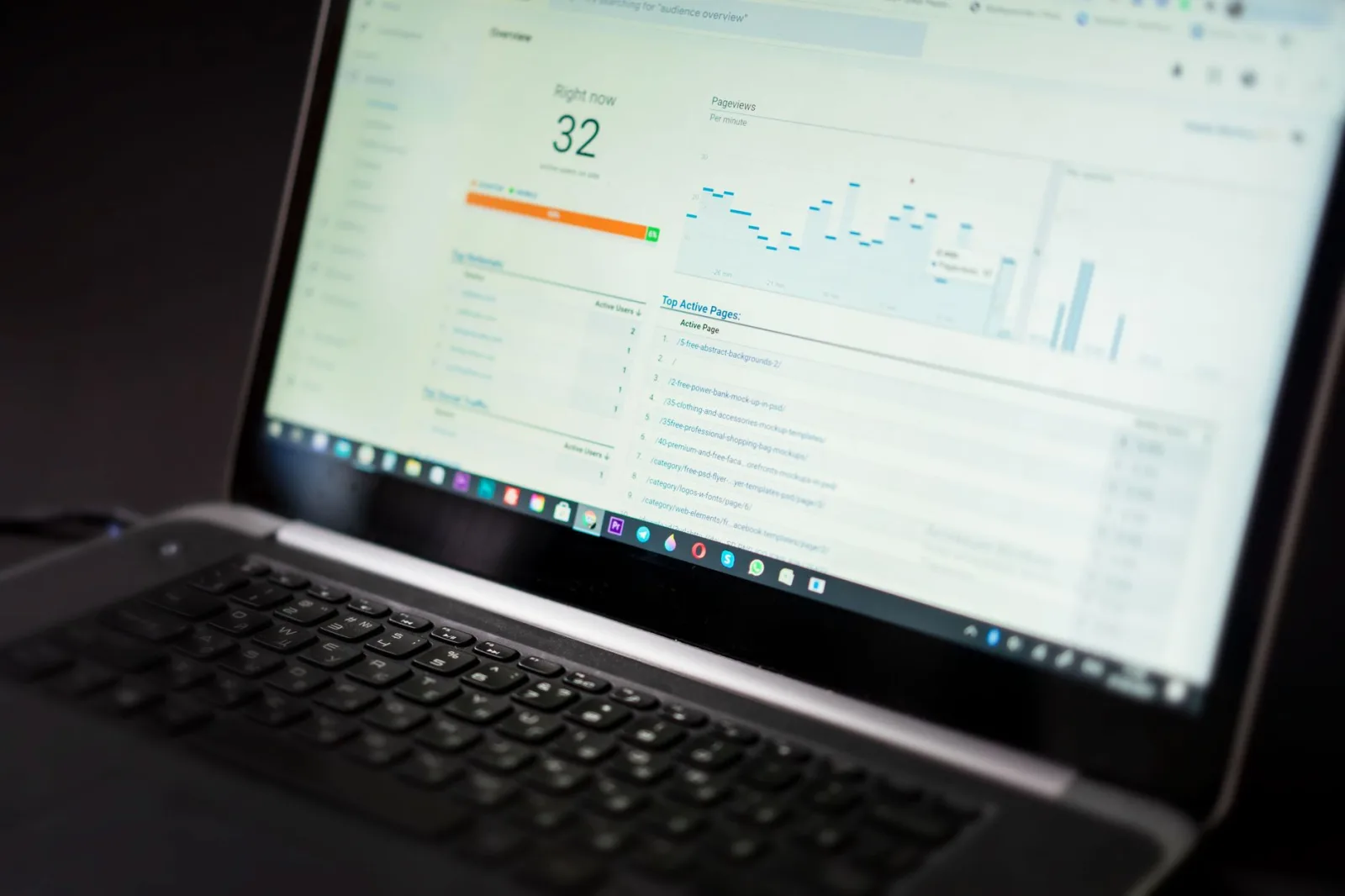
In his first month he opened the analytics panel every time he picked up his phone. He published four videos, each between sixty and ninety views, so he worked out the average, divided it by his hours of work, and concluded he had failed.
In fact there was one number in that panel that meant something real, and he never looked at it once: people were watching his fourth video to its sixth minute, and they were leaving his first at second forty.
Four videos and a clear improvement. But he was looking at the wrong number.
A first month is not a measurement, it is a trial
In your first month you are not running a channel, you are learning a craft. And you are learning four things at once: writing, speaking to camera, filming, and editing. Somebody learning four skills together is not measured by the result but by the number of repetitions.
Which is why most of what is in the analytics panel does not concern you yet. That panel is made for a channel with enough material for patterns to appear, and four videos is not enough material for any pattern.
Three numbers only, in your first month
1. How many videos you actually published. This is the most important number in your first month with no competition. Four published beats ten in drafts. And it is the only number entirely in your own hands, controlled by nobody else.
2. Average percentage viewed. That is, how much of the video people watched relative to its length. This number is not badly distorted by small counts, because it measures the behaviour of whoever came in rather than how many came in. And if you see it improving from video to video, you are progressing even if views stay flat.
3. What happens in the first thirty seconds. Open the retention curve and look only at its start. A steep drop in the opening seconds is the most fixable fault at the beginning, and fixing it changes everything after it. How that curve is read in three zones is the subject of the retention curve in YouTube analytics: where viewers leave and why.
Three numbers. No fourth.
Five things to ignore completely this month
Subscriber count. In a first month it is a social number rather than a performance one: friends, relatives and the curious. And it moves very slowly at the start by its nature, so tracking it discourages you for nothing.
Earnings. They do not exist yet, and following them in the first month pulls your attention from learning to accounting. When to think about money at all is a question with its own answer.
Click-through rate. The number beginners chase most and the least useful to them, because it is meaningless on small counts. What it actually measures and why there is no fixed good number is in click-through rate: what it means and why there's no fixed good number.
Comparison with other channels. You see their results and do not see their years. A three-year-old channel publishes a video and it reaches an audience built over three years, which does not compare to your third week.
Absolute view count. The number that thrills and depresses and says nothing about the quality of the work, because it is affected by things you do not control.
Why small numbers measure nothing
This is an important practical point: at small counts, the differences between one video and another usually come from randomness rather than from the quality of your work.
A video seen by seventy people and another seen by a hundred and twenty: the difference may be that the first went out at a bad hour, or that somebody shared the second in a group. There is no lesson to learn in that gap.
Which means something reassuring: do not interpret every fluctuation. Wait until you have enough videos for a line to appear rather than dots.
Notes rather than numbers: three sentences after every video
What helps you in a first month is not numbers but written notes. After every video, write three sentences in one file:
- What was the hardest part of making this video? Repetition in this answer shows you where your energy drains, and that is the thing to fix first.
- Which part did I enjoy? This determines the shape of content you will last years in, and it matters more than any number.
- What is the one thing I will do differently? One actionable sentence.
After four videos you have a file that tells you about your channel what the analytics panel never will.
One comment is worth more than a hundred views
In a first month, a comment that engages with something or asks a specific question is the strongest signal you will get. Because it means somebody watched, understood and acted. A silent view tells you nothing; a comment tells you who your audience is and what matters to them.
So read your comments more carefully than your numbers, and reply to every one of them this month specifically.
The most important indicator is not in analytics
On day thirty, ask yourself one question: has filming become easier for me?
If the first video took three days and the fourth took one, you succeeded in your first month even if views stayed flat. Ease of execution is what decides whether you last a year or stop in month two, and channels die of exhaustion more often than they die of low views.
The day-thirty session: half an hour
At the end of the month, sit down once for half an hour and do four things:
- Read your three notes on each video and look for what repeated.
- Look at average percentage viewed across the videos in date order: is it rising?
- Choose one fault to work on next month, not three.
- Decide how many videos you will publish next month, and be conservative.
Then close the panel and do not open it for another month.
When to actually start reading the numbers
When you have ten videos or more. At that point patterns start to appear: which subject works, which format, which length. Before that you are reading noise and calling it information.
Three traps in a first month
- Changing everything after every video. Constant change stops you knowing what had the effect. Change one thing at a time.
- Deleting out of discouragement. The weak video you published is your measure of progress a year from now, and what to do with a video you do not like is in the video you shot and do not like: publish it or reshoot it.
- Waiting for a signal before continuing. There is no signal in a first month. The signal comes after you have published enough for one to appear.
In short
Measure three numbers, write three notes after every video, read your comments, and publish more. And on day thirty do not ask "how many views", ask "how many videos did I publish, and has this got easier". Those two questions decide whether you are still here in a year, and everything else can wait.