
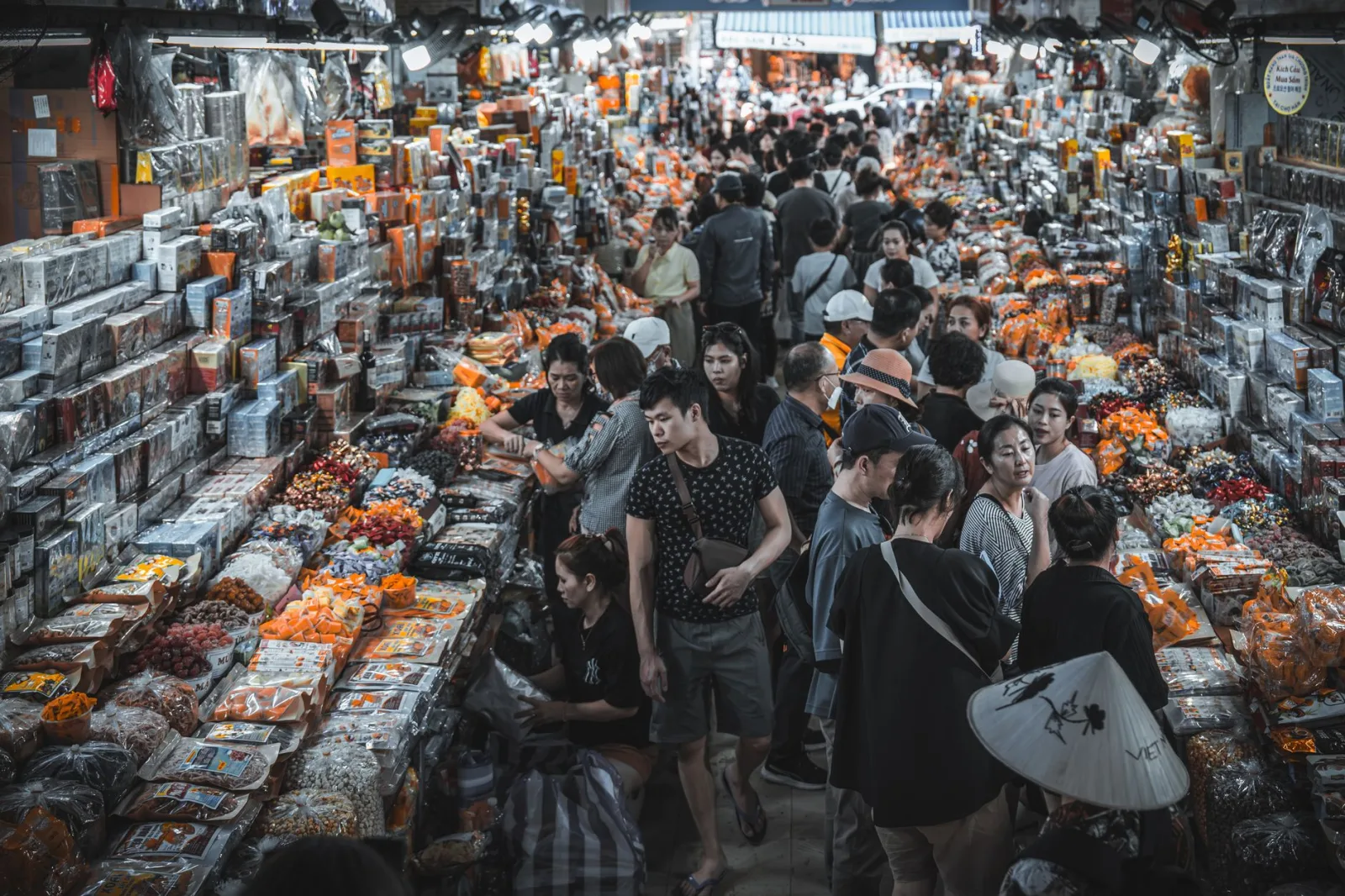
He walked into the spice market at eleven in the morning, the worst hour he could have picked. He put the camera on his shoulder and started down the central lane. In the second minute a handcart shoved him sideways. In the fourth a trader asked what he was filming. In the seventh a man stood in front of the lens wanting to know who had given him permission. He came out half an hour later with twenty minutes of shaky footage, sound buried in noise, and not one shot that could open a scene.
The crowd was not the problem. The crowd is the reason he went there in the first place. The problem was walking in with no plan, into a place that gives you no time to think.
The crowd is not your enemy, time is
In a closed room you own the time. You move the lamp, try three angles, shoot it again. In a market you own none of that. Everything moves, the light changes every ten paces, and people notice you within seconds. Your success in a market is measured by what you decided before you went in, not by what you work out once you are inside.
The practical rule: every decision you can make at home, make at home. Which lens? Which settings? Which five shots do you want? Where will you film each one from? Walk in knowing the answers and your work in the market becomes execution rather than searching.
Go once without a camera
This is the most important line in the article and the most ignored. Visit the market the day before and carry nothing. Walk it for half an hour and look at four things:
- The lanes: which are wide enough to stand in, and which are so narrow they force you to keep moving?
- The light: where does it come in? Are there gaps in the roof that make shafts of light? At what hour does it look best?
- The hours: when does the market open? The first hour gives you a near-empty space with traders laying out their goods, which is a good scene in its own right. The peak hour gives you life, movement and noise.
- The people: which trader smiled at you? Which one watched you with suspicion? The first one is your door into the whole market.
On that visit, talk to one or two traders with no camera in your hand. Introduce yourself, buy something, say you are coming tomorrow to film. The next day you have an ally inside the place, and that changes everything. If you are in a country you do not know, this is also the job of the local fixer.
Three fixed positions instead of wandering
The biggest mistake in market filming is walking continuously with the camera up. You end up with a great deal of material that is good for nothing, and you draw everyone's attention.
Instead, choose three positions, stand in each for five minutes, and film whatever passes in front of you:
- High or far: from the mouth of the lane, a step of a staircase, or a floor above. This gives you the wide shot that says "this is the place".
- In the middle of it: a corner that does not block the traffic, where people pass you from both sides. This gives you movement and depth.
- With one trader: his hands, the scale, the bags, his face while he talks to a buyer. This gives you detail and faces, and that is what makes the scene human rather than touristic.
Together the three make a complete scene: wide, medium, close. That is what an editor looks for, and what you will thank yourself for.
The smaller your kit, the fewer the questions
There is a direct relationship between the size of your camera and the number of people who stop you. A small camera with a prime lens makes you a tourist. A big body with a boom microphone and a tripod makes you a production crew, and people deal with a production crew differently.
For a market specifically: one fairly wide lens is enough. Do not change lenses in the middle of a crowd, because dust is everywhere and time is not on your side. Leave the tripod in the bag and use your hands or a small stabiliser. Hang the strap around your neck rather than over your shoulder, because a shoulder strap slips the moment somebody pushes past.
What to say when someone asks
Somebody will ask. Expect it and prepare one short sentence, memorised in the local language if you can manage it: who you are, what you are filming, and where it will appear. For example: "I am making a video about the market for my YouTube channel, and I am filming the place rather than people."
Then work by three rules:
- If someone says "do not film me", lower the camera at once and thank them. Do not argue and do not explain. The full rule is in filming other people: permission and respect.
- If a man tells you he runs the market, stop and listen. Many covered markets are private property even when they look public, and that distinction is covered in filming in public places.
- If a trader asks for money to be filmed, you may pay or refuse, but decide your principle before you travel rather than in the moment.
Sound: record it separately, and twice
The sound of a market is half the scene. But the sound that goes into your camera while you walk is usually good for nothing. Do two things.
Let a small recorder or your phone capture two full minutes of the place while you stand still. This is room tone, and it is what fills the gaps in the edit and hides your cuts.
If you want to record a trader talking, move him two steps out of the crush into a quieter corner and bring the microphone close. The rest of the detail is in recording outdoors: wind and noise.
How to walk with a camera down a narrow lane
If you want a moving shot that travels through the people, these are its conditions: set focus at a fixed distance and do not let it hunt, walk in short steps from the knee rather than the shoulder, watch the screen with the corner of your eye and the path with the whole of it, and record far longer than you need. Out of every minute of walking you will keep about eight usable seconds, and that is a normal rate rather than a failure.
When to stop
Do not leave the market because your card filled up. Leave because you got your list. Sit at a café nearby, open the camera, and check: do I have the wide shot? The movement? The face? The hands? The two minutes of room tone? If something is missing, the market is a few steps away. If the list is complete, you have finished the scene, and every extra minute you shoot is another minute you will delete in the edit.