
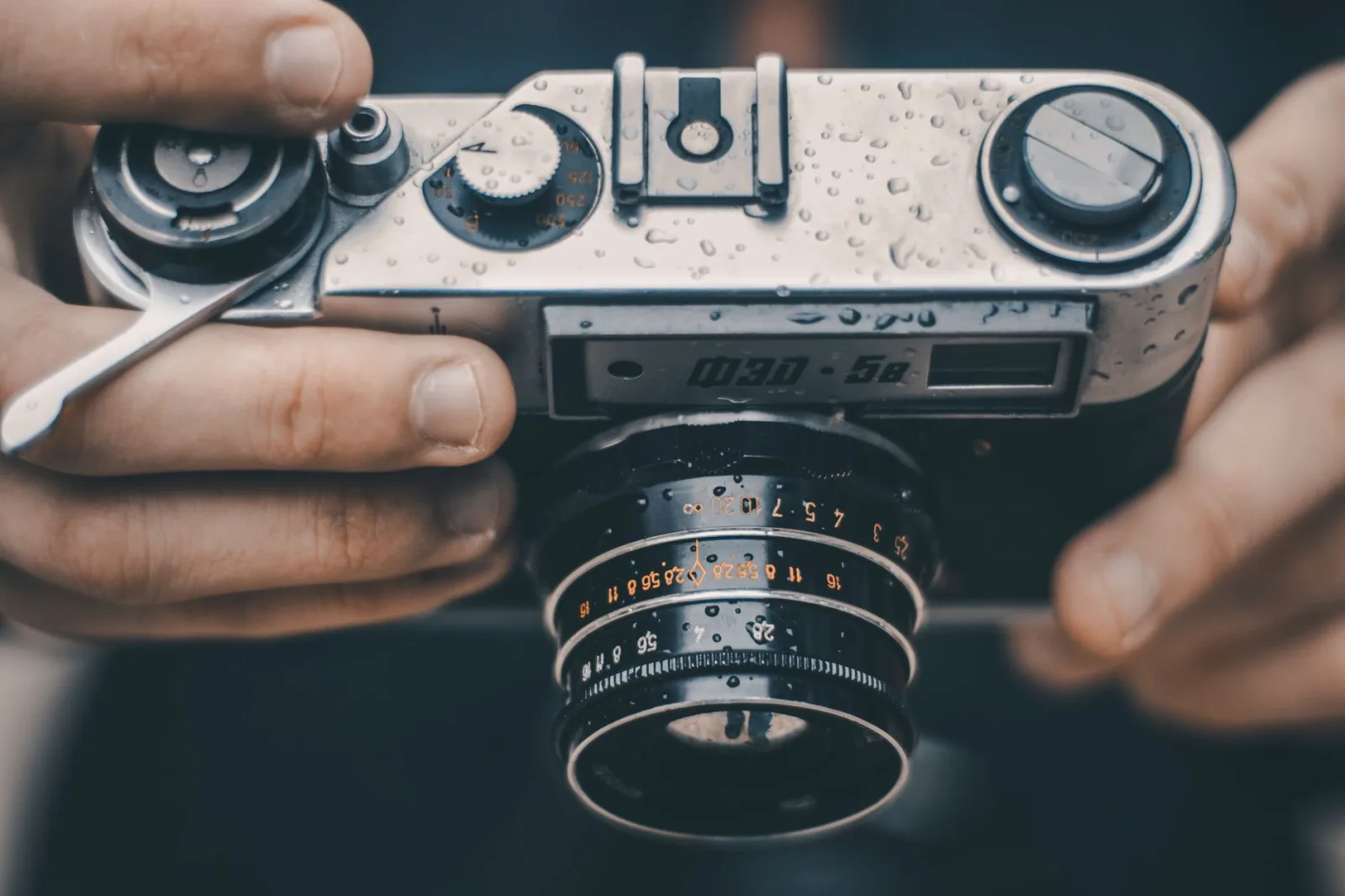
He was in a mountain village waiting for one scene: a man working his field in the rain. The rain came, heavier than he expected.
So he took off his jacket and covered the camera with it, and filmed ten minutes one-handed while shielding the body with the other. Back at the hotel he found the lens fogged from inside, the memory card showing an error, and the shirt he had wiped the lens with had left streaks on it.
And more important than all of that: the scene he had travelled for went unfilmed, because he was busy protecting his gear rather than watching the man.
Weather is not an enemy. Weather is what makes your scene different from a thousand scenes in sunshine. But it needs preparation you put in the bag before you go out.
The rule: protection is prepared before it is needed
Everything in this article can be prepared in ten minutes for very little money. What ruins a shoot is not the rain but rain arriving while you are unprepared, so an hour goes on rescuing the gear instead of working.
Rain
- A clear plastic bag with a hole for the lens and another for the viewfinder. That is the solution at almost no cost; ready-made covers are slightly better, not vastly.
- A small absorbent towel. Do not wipe the lens with your shirt or a paper tissue, because dust mixed with water scratches. Dab the water off from the side rather than rubbing.
- A clear filter on the lens. A cheap piece of glass that protects the expensive surface and makes cleaning between shots easy.
- Do not change lenses in the rain. If you must, do it inside the bag or under a roof.
- Carry the camera and lens pointing down while walking, so water runs off the front instead of pooling on it.
Dust and sand
- Never open the camera body in wind. Changing a lens in a sandstorm is the fastest route to a sensor that can only be cleaned in a workshop.
- A sealed bag for the camera between scenes, even a shopping bag with the top twisted shut.
- An air blower for the lens, and do not blow with your mouth, because the moisture glues dust down.
- Protect the mic and the stand. Sand gets into a tripod's joints and ruins its movement, and the mic needs a foam cover.
Cold
- Batteries go first. In cold a battery gives you a fraction of its runtime, and it is dormant rather than damaged. Put it in an inside pocket close to your body and it comes back; the rest of the calculation is in Batteries and memory cards: what to actually buy.
- Condensation is the real danger. Bring a cold camera into a warm room and moisture condenses on the glass and inside the body. The fix: put the camera in a sealed bag before you go in, and leave it there an hour so it warms gradually.
- Touch. Thin gloves let you press buttons; whoever takes a glove off every minute loses both their hands and their shots.
Heat and strong sun
- Cameras shut down from heat if you record long takes at a high setting. Stop recording between scenes, and never leave the bag in the sun or in a closed car.
- Shade first. A minute spent finding shade beats trying to fix a harsh picture in the edit.
- A neutral density filter lets you keep sane settings in strong sun without pushing the shutter past where it belongs, and the whole relationship is in Camera Basics and the Exposure Triangle.
- Water. For you before the camera.
Four cheap items to always carry
| The item | What it protects you from |
|---|---|
| Two sealable plastic bags | Rain, dust and condensation |
| A small absorbent towel | Water on the body and the lens |
| A clear filter on the lens | Scratches and dust |
| Silica gel packets in the bag | The damp that lingers after rain |
All four fit in one pocket of your bag and weigh nothing.
How weather shows up on screen
Rain does not appear in frame by itself, and plenty of people film in heavy rain and come away with a picture that looks like an overcast day. Four things make it visible:
- Light from behind or from the side. Drops are seen when light strikes them, not when the light is behind you.
- A dark background. Rain shows against dark and disappears against a white sky.
- Close shots of detail. Water on a hand, a drop on a leaf, steam off a cup. Those shots are what carry the feeling of the day into the edit.
- Sound. Rain on a roof is stronger than rain on screen. Record a minute of ambient sound alone in every kind of weather; it is the most useful thing you carry home.
In wind, sound is the first thing to fail: put a foam or furry cover on the mic, make your body a wall between the wind and the mic, and record speech in a sheltered spot even if it is away from the scene.
Your safety before the camera
This is not a formality. Do not film in low ground in heavy rain, do not raise a metal tripod in a lightning storm, do not drive a mountain road in a storm for a shot, and do not stay in the sun for hours with no water and no shade.
And do not film anybody in a dangerous position, and never ask somebody to repeat something dangerous for the frame. Any scene in the world is cheaper than a device, and every device is cheaper than a person.
If you work alone this matters more, and the rest of its rules are in Filming Alone in a Country You Don't Know.
Back at base in the evening
- Dry the body and lens with a dry towel, and leave the camera with its covers open in a moderate room.
- Never put damp gear in a closed bag for a whole night.
- Copy the files first, before anything else, because water shows its effect hours later rather than at the moment.
- Check the card, and if an error appears do not film on it and do not format it.
That hour is the item we set aside in The shooting trip schedule, and in harsh weather it matters more than the whole filming day.
And if the weather stops you
A day can be lost to rain entirely. Do not sit in the room waiting: film what works indoors, meet whoever you meant to meet, film the details of the wet place, or record your voiceover. The whole rule is in What do you do when the film collapses and you are already there?
Harsh weather is not an obstacle in your film; it is usually the best thing in it. And whoever packed four cheap items in their bag has turned weather from a problem into a scene.